If you work at PMRF Barking Sands, Lihue Airport TSA, the Kauai Post Office, or any federal agency on the Garden Isle, you don't have to fly to Oahu for specialized work injury treatment. Here's how to protect your claim and your health.

Federal employees on Kauai face a problem that their colleagues on the mainland rarely have to think about. When a TSA officer at Lihue Airport tears a rotator cuff during a screening, or a civilian contractor at Pacific Missile Range Facility develops chronic lumbar pain from years of heavy equipment work, the OWCP system tells them to seek authorized medical treatment. The system does not, however, tell them where to find it on an island where specialist availability is limited and the nearest large occupational health network is a 30-minute flight and an entire day's travel away on Oahu.
This is the reality for nearly 1,000 defense personnel, civilian contractors, and federal employees working at PMRF Barking Sands alone—the world's largest instrumented multi-environmental missile range and Kauai's third-largest employer. Add the TSA workforce at Lihue Airport, USPS carriers and clerks across the island, FAA air traffic controllers, National Weather Service staff, US Fish & Wildlife personnel, and other federal agencies, and the Garden Isle has a substantial population of workers whose injuries fall under the Federal Employees' Compensation Act rather than Hawaii state workers' compensation.
The distinction matters enormously. FECA claims processed through the Office of Workers' Compensation Programs follow a completely different set of procedures, forms, timelines, and documentation standards than state workers' comp. Filing the wrong form, missing a 30-day deadline, or working with a physician who does not understand OWCP-compliant medical narratives can result in delayed benefits, denied claims, or gaps in treatment that undermine both recovery and the legal record of the injury.
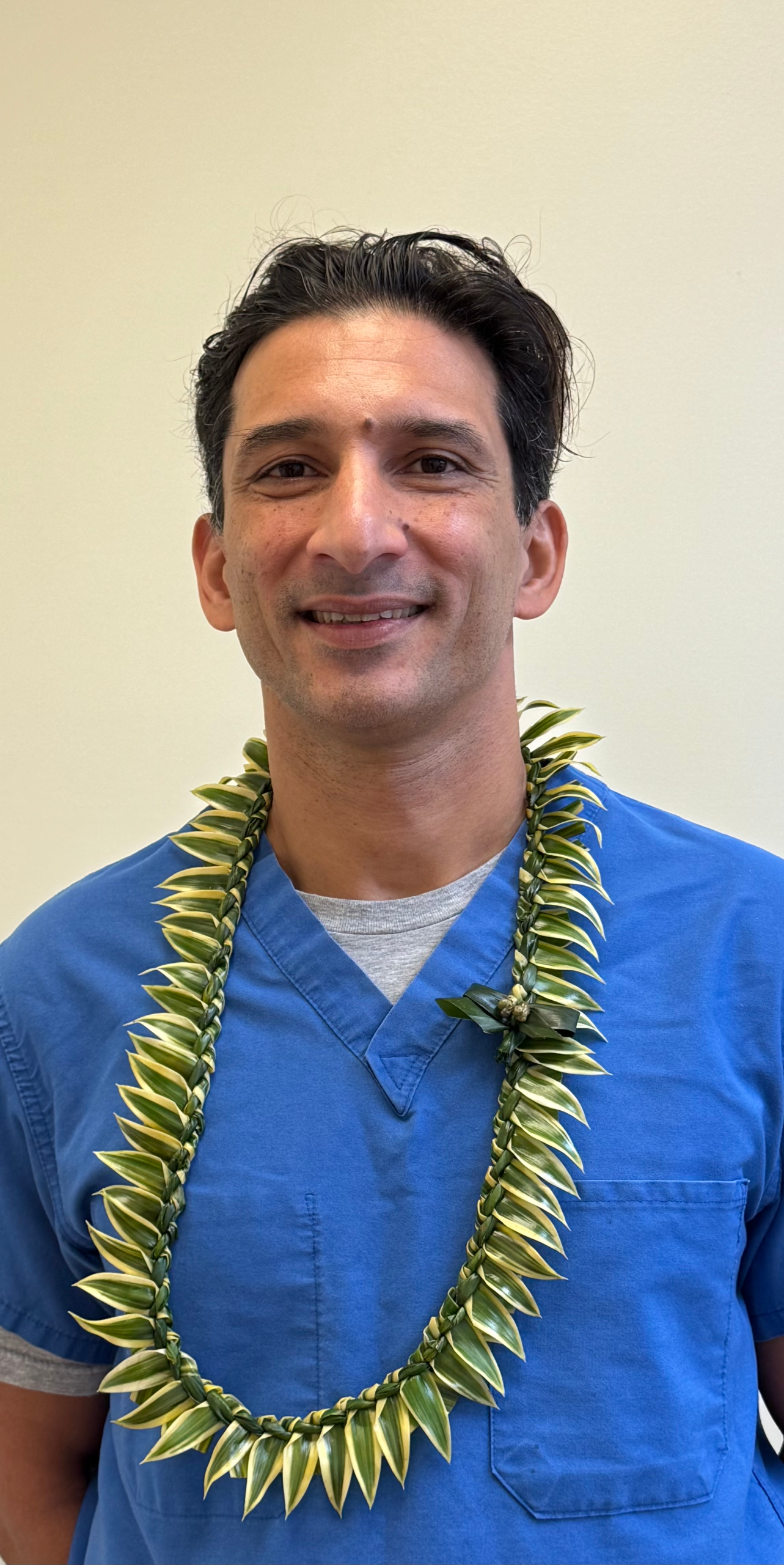
At Vally Medical Group's Lihue clinic, we have built our practice around understanding these distinctions. We treat federal employees under OWCP regularly, and we know the difference between a medical note that satisfies a treating physician's clinical judgment and a medical narrative that satisfies a claims examiner at the Department of Labor.

Pacific Missile Range Facility is not a typical workplace. Located on a remote stretch of Kauai's west side near Kekaha, the facility supports missile defense testing, submarine tracking, satellite operations, and large-scale naval training exercises across more than 42,000 square miles of controlled airspace and 1,100 square miles of instrumented underwater range. The work is physically demanding. Contractors maintain heavy radar equipment, technicians perform repetitive calibration tasks, and support staff manage logistics in conditions that range from extreme heat on the exposed coastal plain to the physical strain of working in secure facilities with limited ergonomic accommodations.
The injuries that come out of PMRF are the injuries you would expect from this environment. Lumbar disc herniations from repeated heavy lifting. Rotator cuff tears from overhead equipment work. Carpal tunnel syndrome from years of data entry and instrumentation monitoring. Chronic knee degeneration from walking on uneven terrain. Heat-related conditions from extended outdoor operations. These are not exotic injuries, but they require a physician who understands both the occupational context and the OWCP documentation standards that the Department of Labor requires.
Until recently, many PMRF employees were told—either by their agency or by the sheer lack of local options—that they needed to fly to Honolulu for specialized occupational medicine evaluations. A single medical appointment on Oahu means a full day of travel, the cost of inter-island flights, and time away from both work and family. For a worker managing a chronic condition that requires regular follow-up visits, the cumulative burden is substantial. For a worker in acute pain following a traumatic injury, the delay can be medically harmful.
Our Lihue clinic is 35 minutes from PMRF, located at 2978 Haleko Road Suite B, just five minutes from Lihue Airport. We see PMRF employees, contractors, and dependents regularly, and we understand the specific physical demands of their work environment. When a contractor describes the awkward lifting positions required to service equipment in a confined radar housing, we know exactly what that means for the mechanics of their lumbar spine—and we document it in language that OWCP claims examiners can act on.
For PMRF Employees and Contractors: You have the right to choose your treating physician under FECA. You are not required to use a military medical facility or fly to Oahu for specialized occupational medicine care. Vally Medical Group in Lihue accepts OWCP and provides the full range of diagnostic, treatment, and documentation services your claim requires.
The federal workers' compensation system operates under FECA—the Federal Employees' Compensation Act—administered by the Department of Labor's Office of Workers' Compensation Programs. Unlike Hawaii state workers' compensation, which is managed by the state Department of Labor and Industrial Relations, OWCP is a federal program with its own forms, timelines, and requirements. Knowing which form to file and when to file it is the difference between receiving benefits promptly and fighting a bureaucratic denial for months.

A CA-1 is filed when you sustain a traumatic injury—an injury caused by a specific incident at a specific time and place during a single work shift. A TSA officer who slips on a wet floor at the Lihue Airport checkpoint and fractures a wrist files a CA-1. A PMRF contractor who strains their back while lifting a cable spool during a test setup files a CA-1. The injury must be identifiable as to time, place, and body part affected.
The critical timeline: file your CA-1 within 30 days of the injury to qualify for Continuation of Pay. COP provides up to 45 calendar days of your regular salary while OWCP processes your claim, without requiring you to use sick leave or annual leave. Miss the 30-day window and you forfeit COP entirely—a costly mistake that we see far too often with employees who were not properly advised at the time of injury.
A CA-2 is filed for conditions that develop gradually over time due to workplace exposure or repetitive activity. Carpal tunnel syndrome from years of keyboard work at a PMRF data center. Chronic hearing loss from proximity to missile test operations. Degenerative disc disease that worsened progressively through years of physical labor at Nawiliwili Harbor's federal operations. Unlike the CA-1, there is no COP eligibility for CA-2 claims, making strong medical documentation of the causal relationship between work conditions and the diagnosed condition even more important from the outset.
If you file a CA-1 within seven days of a traumatic injury, your employing agency can issue a CA-16 form that guarantees payment for medical treatment for 60 days while OWCP reviews your claim. This is a powerful tool that many federal employees on Kauai do not know about. The CA-16 eliminates the uncertainty of whether your treatment will be covered during the initial claims review period, allowing you to begin treatment immediately without waiting for a formal claims decision.
Notify your supervisor and complete the OSHA-301 incident report through ECOMP (the DOL's electronic portal). This must be done within 4 calendar days for incident reporting.
Submit CA-1 (traumatic injury) or CA-2 (occupational disease) through ECOMP. For CA-1: file within 30 days for COP eligibility. Request a CA-16 within 7 days for immediate treatment authorization.
Under FECA, you have the right to select your treating physician. Choose a provider experienced in OWCP documentation—this decision directly affects both the quality of your care and the strength of your claim.
Your physician provides treatment and generates OWCP-compliant medical narratives that establish causation, document functional limitations, and support your entitlement to benefits.
Your agency forwards the completed forms to OWCP within 10 business days. OWCP reviews and issues a decision. If denied, you have reconsideration and appeal rights—and your medical documentation is your strongest tool.
The single most common reason OWCP claims are denied is insufficient medical documentation. Not because the injury did not happen, but because the physician's report did not clearly establish the causal connection between the work activity and the diagnosed condition. This is why choosing a physician experienced in OWCP narratives matters.
There is a meaningful difference between a medical note that reads "Patient presents with low back pain, likely work-related" and a medical narrative that reads "Patient presents with acute L4-L5 disc herniation confirmed by MRI dated [date], consistent with the mechanism of injury described—a single lifting event involving a 65-pound equipment case on [date] at Pacific Missile Range Facility. The patient's job duties require repetitive bending and lifting in confined spaces, which is consistent with the type of compressive force that produces posterior disc herniation at this level. It is my medical opinion, to a reasonable degree of medical certainty, that this condition was caused by the described work event."
The first note might satisfy the treating physician's clinical records. The second narrative satisfies an OWCP claims examiner. We write the second kind.

At our Lihue clinic, the OWCP documentation process is integrated into the treatment workflow from the first visit. When a PMRF contractor, TSA officer, or postal worker walks in with a work injury, we do not treat it as a routine office visit with paperwork to handle later. We treat it as a medical-legal event that requires precision in documentation from the moment we take the history.
Every initial evaluation includes a detailed mechanism of injury description that connects the specific work activity to the diagnosed condition, functional capacity assessment documenting exactly what the patient can and cannot do in their specific job role, diagnostic imaging interpretation with findings correlated to the described injury mechanism, and a treatment plan that includes both the medical rationale and the expected timeline for recovery or maximum medical improvement.
OWCP has the right to send you for a Second Opinion Examination (SOE) or a Referee Medical Examination (RME) with a physician of their choosing. These examinations are designed to verify or challenge the findings of your treating physician. The outcome of a second opinion exam can directly affect whether your benefits continue, whether additional treatment is authorized, and whether your claim is ultimately accepted or denied.
The best defense against an unfavorable second opinion is a thorough initial medical record. When your treating physician's documentation is detailed, specific, and clinically supported by diagnostic imaging and objective examination findings, it becomes significantly more difficult for a reviewing physician to reach a contradictory conclusion without clear justification. This is where the quality of your original medical narrative pays dividends.
We also see patients who have received unfavorable second opinions and need a treating physician willing to provide a detailed rebuttal. If you believe an OWCP second opinion examination did not accurately reflect the severity or causation of your condition, Dr. Vally can provide an independent clinical assessment with a comprehensive narrative that addresses the specific points of disagreement.
Our Lihue clinic serves federal workers across every major agency operating on the Garden Isle. The injuries vary by agency and job function, but the OWCP documentation requirements apply equally to all of them.
| Agency / Employer | Common Injuries We Treat | OWCP Considerations |
|---|---|---|
| PMRF Barking Sands (DoD civilians & contractors) | Lumbar disc herniation, rotator cuff tears, carpal tunnel, hearing loss, heat-related illness | Confined-space injury documentation, classified work environment limitations on disclosure, contractor vs. civilian employee eligibility |
| TSA — Lihue Airport | Shoulder impingement from repetitive screening, back strain from baggage handling, slip-and-fall injuries | DHS-specific OWCP procedures, high CA-1 volume due to physical nature of screening duties |
| USPS — Kauai Post Offices | Knee degeneration from mail routes, repetitive strain injuries, dog bite injuries, motor vehicle incidents on delivery routes | Postal Service has its own OWCP liaisons; CA-2 claims common for cumulative conditions from years of carrying mail on foot |
| FAA — Air Traffic Control | Cervical strain from sustained head positioning, stress-related conditions, carpal tunnel from extended console work | FAA employees have specific medical certification requirements; treatment plans must account for return-to-duty standards |
| National Weather Service, USFWS, USDA | Field injuries from terrain, repetitive strain, exposure-related conditions | Often remote field workers with delayed injury reporting; CA-1 timeline education critical |
One of the most common frustrations federal employees describe when navigating OWCP is the wait. Waiting for a claims decision. Waiting for treatment authorization. Waiting weeks for a specialist appointment at a high-volume occupational health clinic where you are one of hundreds of claimants processed through a system optimized for throughput rather than individual care.
At Vally Medical Group in Lihue, the experience is fundamentally different. Our clinic operates at a scale that allows us to see OWCP patients promptly—often within days of the initial injury, not weeks. When you arrive, you see Dr. Vally directly. You are not triaged through a physician assistant, routed to a nurse practitioner, or handed off between providers. The physician who examines you on day one is the same physician who writes your medical narrative, interprets your imaging, designs your treatment plan, and manages your care through to resolution.
| Factor | High-Volume Network | Vally Medical Group Lihue |
|---|---|---|
| Initial appointment | 2–4 weeks (may require Oahu travel) | Within days, locally on Kauai |
| Treating physician | Rotating providers; may see different doctor each visit | Dr. Vally directly, every visit |
| Documentation quality | Template-based; generic medical narratives | Individualized OWCP-compliant narratives with causation language |
| Advanced treatment | Referral-based; additional wait times | In-house PRP, injection therapy, HBOT |
| Communication | Call center; messages relayed through staff | Direct physician communication for urgent claim matters |
| Travel burden | Inter-island flights to Oahu | 35 min from PMRF, 5 min from Lihue Airport |
Beyond standard evaluation and documentation, our Lihue clinic offers treatment modalities that most Kauai practices simply do not have. Platelet-Rich Plasma (PRP) therapy uses your own concentrated platelets to accelerate tissue repair in damaged tendons, ligaments, and joints—particularly effective for the chronic tendon injuries common among PMRF maintenance workers and TSA screening officers. Targeted injection therapy delivers anti-inflammatory medication directly to the source of pain, providing focused relief for nerve impingement, joint inflammation, and disc-related radiculopathy. Soft Hyperbaric Oxygen Therapy (HBOT) enhances cellular repair by increasing oxygen delivery to damaged tissues, accelerating recovery from both acute injuries and chronic inflammatory conditions.
These treatments are available at our Lihue clinic without requiring referral to off-island specialists. For an injured federal worker on Kauai, that means fewer days away from work, less travel expense, and a faster path to recovery.
Federal employees have specific rights under the Federal Employees' Compensation Act that many workers are not fully aware of. Understanding these rights is essential to ensuring that you receive the benefits and treatment you are entitled to.
Right to Choose Your Physician. Under FECA, you have the right to select your treating physician. Your agency cannot require you to use a specific provider, a military medical facility, or a physician from a particular network. You choose the doctor you trust, and OWCP pays for authorized treatment from that provider.
Right to Continuation of Pay. If you file a CA-1 within 30 days of a traumatic injury, you are entitled to up to 45 calendar days of your regular salary while OWCP reviews your claim. COP is not sick leave and is not charged against your leave balance.
Right to Appeal. If OWCP denies your claim, you have the right to request a hearing, request reconsideration with new evidence, or appeal to the Employees' Compensation Appeals Board. Your treating physician's documentation is the foundation of any successful appeal.
Right to Vocational Rehabilitation. If your injury prevents you from returning to your previous position, OWCP provides vocational rehabilitation services to help you transition to suitable alternative employment.
A Note to Federal Employees at PMRF: If you are a contractor rather than a direct federal civilian employee, your workers' compensation coverage may fall under different programs depending on your employer's structure. The Defense Base Act (DBA) covers certain contractor employees working on military bases. We can help you determine which program applies to your situation and ensure you are filing through the correct channel.
Vally Medical Group in Lihue provides OWCP-authorized treatment, documentation, and ongoing care for federal employees across Kauai. Don't let paperwork or distance delay your recovery.
Schedule Your Appointment →2978 Haleko Rd Suite B, Lihue, HI 96766 • (808) 935-6353 • Monday–Friday 8am–4pm
Disclaimer: This article is provided for informational purposes only and does not constitute legal advice. OWCP claims procedures, timelines, and benefits are governed by federal law and regulation. Employees should consult the Department of Labor's OWCP resources and, where appropriate, a federal workers' compensation attorney for guidance specific to their individual claim. Vally Medical Group provides medical treatment and documentation services; we do not provide legal representation.