From surfer's shoulder to hiker's knee to the daily wear of a 10-hour resort shift—the Garden Isle demands a lot from your body. Here's how regenerative medicine can get you back to doing what you love, without going under the knife.

Living on Kauai means living an active life. The island practically requires it. You paddle out at Hanalei Bay before sunrise. You hike the Kalalau Trail on your day off. You surf the south shore breaks near Poipu, or you kayak the Wailua River with friends. Even if none of those activities are your thing, there is a strong chance your body is working hard anyway—because Kauai's economy runs on hospitality, agriculture, and trades, and every one of those industries puts extraordinary physical demands on the people who show up for them.
The Grand Hyatt Kauai has housekeepers who make over a dozen beds per shift, bending and lifting for eight hours straight. The Marriott's Waiohai Beach Club has servers carrying heavy trays across uneven poolside surfaces. Princeville resorts have maintenance staff climbing ladders and handling equipment in tropical humidity. The Sheraton Kauai has bellhops shouldering luggage up and down stairs, shift after shift. Kukui Grove Shopping Center has retail employees standing on hard floors for the better part of a decade. And then there are the construction crews, the landscapers, the tour boat operators, and the coffee farm workers who make the island function.
These bodies accumulate damage. Tendons fray. Cartilage wears thin. Ligaments stretch beyond their capacity to recover. And at some point, ibuprofen and ice are not enough anymore, but the idea of surgery—with its recovery time, its risks, and the reality that it would mean weeks or months away from the income you depend on—feels like an impossibility.
This is the space where Platelet-Rich Plasma therapy operates. Not as a miracle cure, but as a clinically proven intervention that can repair damaged tissue, reduce inflammation, and restore function in joints, tendons, and ligaments—without an incision, without general anesthesia, and without the prolonged downtime that surgery demands.

Every island has its signature injuries. Kauai's come from the particular combination of terrain, climate, and labor that define life on the Garden Isle. Here are the conditions we treat most frequently at our Lihue clinic with PRP and regenerative medicine:
The repetitive overhead paddling motion that every surfer knows—session after session, year after year—gradually breaks down the tendons of the rotator cuff. The supraspinatus tendon takes the worst of it. On Kauai, where surf culture is not a hobby but a way of life, we see this pattern in recreational surfers who paddle out at Poipu Beach Park, competitive watermen training at Hanalei, and stand-up paddlers working the calmer waters of Kalapaki Bay. PRP injections deliver concentrated growth factors directly to the damaged tendon fibers, stimulating repair at the cellular level in tissue that has notoriously poor blood supply and heals slowly on its own.
Waimea Canyon's trails are beautiful, but they are not kind to knees. The steep descents along the Canyon Trail, the uneven footing on the Awa'awapuhi ridge, and the relentless downhill switchbacks of the Kalalau Trail put enormous compressive force on the patellofemoral joint. Over time, the patellar tendon becomes chronically inflamed, and the cartilage behind the kneecap begins to soften and thin. We see this in trail runners, day hikers, and especially in the guides and maintenance workers who cover these trails repeatedly as part of their livelihood. PRP has shown particularly strong results for patellar tendinopathy and early-stage cartilage degeneration, delivering growth factors that promote both tendon healing and chondrocyte activity in damaged cartilage.
We coined this term informally to describe a pattern we see over and over in Kauai's hospitality workforce: the combination of chronic plantar fasciitis from standing on hard surfaces, lumbar facet syndrome from repetitive bending and lifting, and bilateral shoulder strain from overhead work. It is not one injury but a constellation of cumulative damage that builds over years in an industry where the physical demands are relentless and the opportunity to rest is limited. Housekeepers at the Grand Hyatt, servers at the St. Regis Princeville, groundskeepers at the Marriott, maintenance techs at the Sheraton—these workers do not have a single traumatic injury they can point to. They have years of micro-damage that has accumulated beyond the body's ability to repair itself.
PRP is especially well-suited for these cumulative conditions because it addresses the underlying tissue damage rather than merely suppressing the pain signal. A cortisone injection might quiet a plantar fascia for six weeks. PRP can stimulate actual regeneration of the damaged fascia tissue, producing results that last.
| Kauai Activity / Job | Common Injury Pattern | Affected Structure | PRP Candidate? |
|---|---|---|---|
| Surfing (Hanalei, Poipu, Kalapaki) | Rotator cuff tendinopathy, labral irritation | Supraspinatus, infraspinatus tendons | Excellent |
| Trail hiking (Waimea, Kalalau, Awa'awapuhi) | Patellar tendinopathy, early OA, meniscal wear | Patellar tendon, articular cartilage | Excellent |
| Resort housekeeping (Poipu & Princeville corridor) | Plantar fasciitis, lumbar facet syndrome, shoulder strain | Plantar fascia, lumbar facets, rotator cuff | Excellent |
| Food & beverage / banquets | Lateral epicondylitis, wrist tendinopathy, ankle sprains | Common extensor tendon, TFCC, lateral ankle ligaments | Good to Excellent |
| Harbor / dock work (Nawiliwili) | Achilles tendinopathy, lumbar disc degeneration, grip injuries | Achilles tendon, lumbar discs, forearm tendons | Good |
| Agriculture (Kauai Coffee, taro, tropical fruit) | De Quervain's tenosynovitis, chronic shoulder impingement | First dorsal compartment, subacromial bursa | Good to Excellent |
There are a handful of providers on Kauai who offer some form of PRP injection. What distinguishes our approach at Vally Medical Group is not the centrifuge—the technology for preparing platelet-rich plasma is well established—but the clinical context in which we use it.

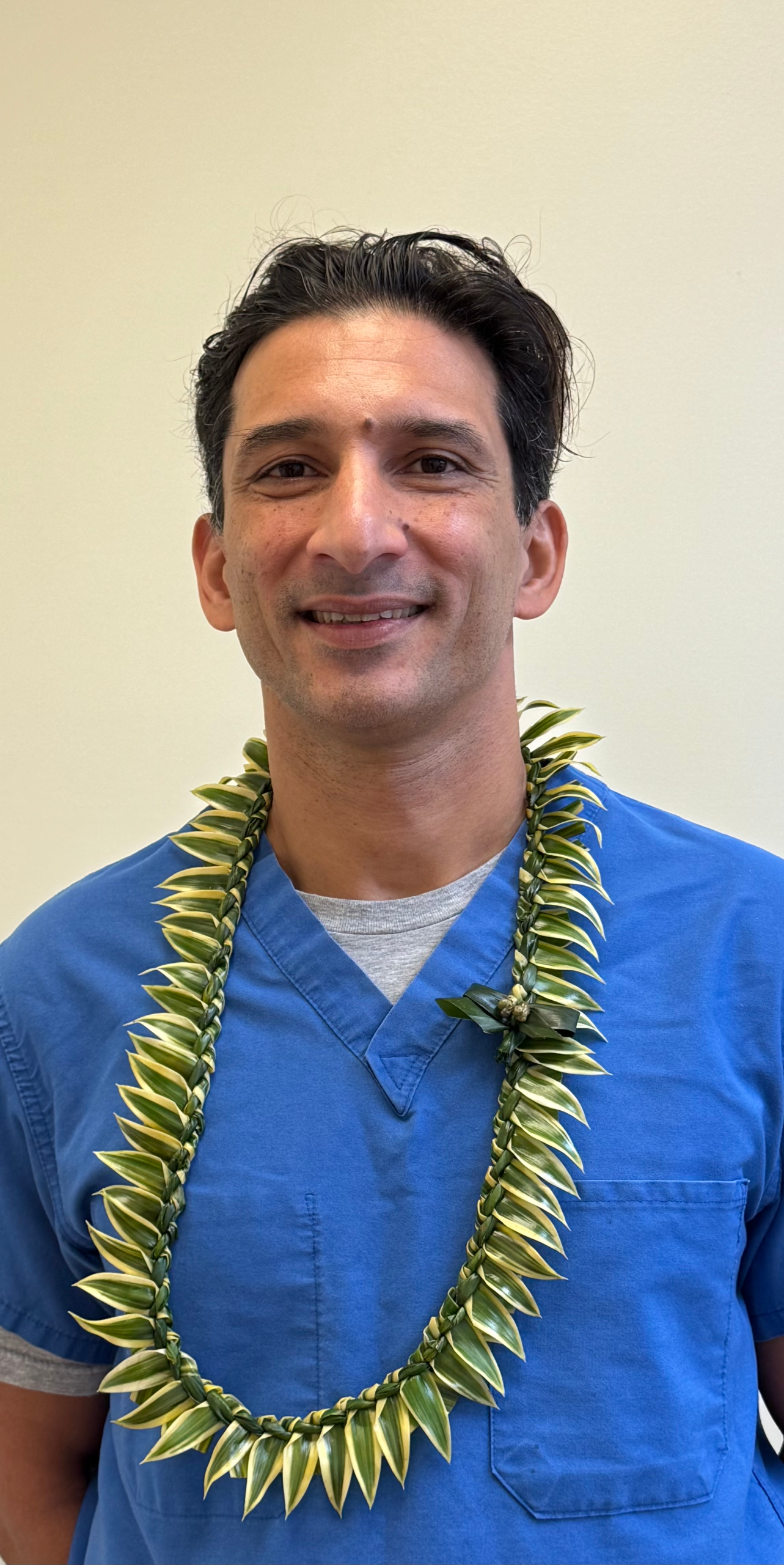
Dr. Vally is board-certified in both internal medicine and occupational medicine. That dual background means two things for PRP patients. First, every PRP treatment begins with a thorough diagnostic evaluation—not just a physical exam, but a complete assessment of the injury mechanism, the patient's work or activity demands, their medical history, and the specific tissue pathology we are treating. PRP is not a one-size-fits-all injection. The concentration, the volume, the number of sessions, and the injection site all depend on a precise diagnosis. A PRP injection into a knee joint for early osteoarthritis is a fundamentally different procedure than a PRP injection into a rotator cuff tendon for chronic tendinopathy, even though both are called "PRP."
Second, Dr. Vally understands occupational context. When a Grand Hyatt housekeeper comes in with bilateral plantar fasciitis, we do not just inject the fascia and send her back to the same conditions that caused the damage. We develop a return-to-activity plan that accounts for the physical demands of her specific job, recommend workplace modifications where possible, and coordinate with workers' compensation if the injury is work-related. The treatment is not complete when the injection is done. The treatment is complete when the patient can function in her actual life without recurrence.
Our Lihue clinic at 2978 Haleko Road Suite B is centrally located for all of Kauai—15 minutes from Kapaa, 20 minutes from the Poipu resort corridor, 35 minutes from PMRF, and 5 minutes from Lihue Airport. Every PRP procedure is performed by Dr. Vally directly, not delegated to a mid-level provider.
This is where our clinic offers something that, to our knowledge, no other provider on Kauai currently does: the combination of Platelet-Rich Plasma therapy with Soft Hyperbaric Oxygen Therapy (HBOT) as a coordinated regenerative protocol.
The logic behind this combination is straightforward. PRP delivers concentrated growth factors to damaged tissue and initiates a cascade of cellular repair. But that repair process is metabolically expensive—it requires oxygen. Lots of it. The cells doing the repair work (fibroblasts, chondrocytes, endothelial cells) consume dramatically more oxygen during active tissue regeneration than during normal function. In tissue that already has compromised blood flow—which is exactly the case in chronically damaged tendons and degenerated cartilage—the local oxygen supply often cannot keep up with the demand created by the PRP-stimulated repair process.
Hyperbaric oxygen therapy addresses this bottleneck directly. By breathing concentrated oxygen in a pressurized chamber, you increase the amount of dissolved oxygen in your blood plasma far beyond what normal breathing can achieve. This oxygen-rich plasma reaches areas of damaged tissue that red blood cells cannot efficiently access, providing the fuel that PRP-activated repair cells need to complete their work.
Concentrated growth factors from your own blood are injected directly into damaged tissue. Initiates the repair cascade: cell recruitment, collagen synthesis, tissue regeneration.
Hyperbaric oxygen floods tissues with dissolved O₂ that fuels the repair process PRP initiated. Enhances angiogenesis, reduces inflammation, accelerates cellular metabolism.
PRP provides the biological instructions for repair. HBOT provides the metabolic fuel to execute those instructions. Together, they create an environment where tissue regeneration can proceed more completely than either therapy alone.
How the protocol works in practice: Patients typically receive a PRP injection on day one, then begin a series of HBOT sessions (usually 2–3 per week) in the days and weeks following, timed to coincide with the peak regenerative activity triggered by the PRP. The specific schedule is tailored to the injury being treated—a damaged rotator cuff tendon has a different healing timeline than degenerative knee cartilage.
Published research supports the biological rationale for this combination. Studies on hyperbaric oxygen have demonstrated increased VEGF (vascular endothelial growth factor) expression, enhanced fibroblast proliferation, and improved collagen deposition in hypoxic tissue—precisely the mechanisms that PRP relies on for therapeutic effect. The research on combining PRP with HBOT specifically is still in its early stages, but the mechanistic synergy is well established, and the clinical results we observe in our patients are consistent with the hypothesis that the combination produces better outcomes than either therapy in isolation.
If you have tried PRP elsewhere and found the results underwhelming, the limiting factor may not have been the PRP itself but the oxygen supply available to the tissue during the repair phase. Adding HBOT to the protocol may be the variable that makes the difference. And if you are considering PRP for the first time, starting with the combined protocol gives the repair process the best possible biological environment from day one.
Hospitality is Kauai's economic backbone, and the physical toll on its workers is enormous. If you work at one of the island's resorts, hotels, or tourism operations and you are dealing with chronic pain from years of physical work, here is what you need to know about getting treatment at our Lihue clinic.

Hawaii's workers' compensation system covers medical treatment for injuries that arise out of and in the course of employment. If your plantar fasciitis, shoulder impingement, or back pain developed because of the physical demands of your job, you may be entitled to have your treatment covered by your employer's workers' comp insurance. You do not need your employer's permission to see a doctor—under Hawaii law, you have the right to choose your treating physician. We handle workers' comp cases regularly, including the paperwork, the reporting requirements, and the documentation that supports your claim.
Not every injury qualifies for workers' comp, and not every patient wants to file a claim. If your knee pain comes from hiking, your shoulder from surfing, or your back from general wear and tear, we see patients for direct care as well. workers' compensation and OWCP and can discuss self-pay options for treatments like PRP that may not be covered by every plan.
Our Lihue clinic regularly treats employees from hospitality operations across the island. Our location on Haleko Road is centrally positioned to serve workers from both the Poipu corridor (Grand Hyatt Kauai, Sheraton Kauai, Marriott's Waiohai Beach Club, Koloa Landing Resort, Poipu Beach Athletic Club) and the Princeville/North Shore corridor (1 Hotel Hanalei Bay, Westin Princeville, Hanalei Colony Resort). We also serve employees from Kauai Beach Resort, Hilton Garden Inn, and the many boutique hotels and vacation rental operations that employ a significant portion of the island's workforce.
The injuries we see from these employers follow predictable patterns based on job function. Housekeeping staff present with lumbar strain and shoulder impingement from bed-making and bathroom cleaning. Front desk and administrative workers develop carpal tunnel and cervical strain from prolonged computer use and standing. Food and beverage staff sustain lateral epicondylitis from carrying heavy trays and chronic foot pain from standing on hard kitchen floors. Grounds and maintenance crews experience the full spectrum of musculoskeletal injuries from heavy lifting, overhead work, and repetitive tasks in humid conditions.
| Treatment Approach | Standard Pain Management | VMG Regenerative Protocol |
|---|---|---|
| Goal | Suppress pain signal | Repair damaged tissue |
| Primary tool | NSAIDs, cortisone injections, pain medication | PRP, HBOT, targeted injections |
| Duration of relief | Weeks to months (symptom suppression) | Months to years (tissue repair) |
| Repeat treatments | Ongoing cortisone limited to 3–4/year (tissue weakening) | 1–3 PRP sessions typical; HBOT series as needed |
| Surgery avoidance | Delays decision; does not address underlying damage | May eliminate need for surgery entirely |
| Workers' comp documentation | Generic notes | Detailed functional assessment with return-to-work plan |
When you come to our Lihue clinic for a PRP consultation, the visit begins with a comprehensive evaluation—not just the area that hurts, but the full picture of how your body is functioning and what demands your work or activities place on it. Dr. Vally will take a detailed history of the injury or condition, perform a physical examination, review any existing imaging (MRI, X-ray, ultrasound), and discuss what conservative treatments you may have already tried.
If PRP is appropriate for your condition, the procedure itself takes about 60 to 90 minutes. We draw a small blood sample, process it in our centrifuge to concentrate the platelets, and inject the resulting PRP directly into the damaged tissue. The injection is guided by anatomical landmarks and, when appropriate, imaging guidance to ensure precise placement. Most patients experience mild soreness at the injection site for two to three days, followed by a gradual improvement in pain and function over the following two to six weeks as the regenerative process takes hold.
If we recommend the combined PRP + HBOT protocol, we will outline a treatment schedule that typically includes HBOT sessions beginning within a few days of the PRP injection, continuing two to three times per week for a period tailored to your specific condition. Our soft hyperbaric chamber is comfortable and non-claustrophobic, and each session lasts approximately 60 minutes.
Recovery is straightforward. We advise avoiding anti-inflammatory medications (ibuprofen, naproxen) for one to two weeks after PRP, as these can interfere with the inflammatory signaling that drives the repair process. Light activity can resume within one to two days. Return to full work duties or sport depends on the severity of the condition being treated, but most patients are back to normal function significantly sooner than they would be following a surgical intervention.
Whether you are a surfer, a hiker, a resort worker, or anyone on Kauai dealing with joint or tendon pain that has not responded to conventional treatment, PRP therapy at Vally Medical Group may be the answer. Contact our Lihue clinic to schedule your consultation.
Schedule Your PRP Consultation →2978 Haleko Rd Suite B, Lihue, HI 96766 • (808) 935-6353 • Monday–Friday 8am–4pm
Learn more about PRP Therapy at Vally Medical Group • Hyperbaric Oxygen Therapy (HBOT) • Targeted Injection Therapy • Workers' Compensation Services • OWCP & Federal Worker Injury Care on Kauai
Disclaimer: This article is provided for informational and educational purposes only and does not constitute medical advice. PRP therapy outcomes vary by individual and condition. Not all conditions are appropriate for PRP treatment. Consult with Dr. Vally or your physician to determine whether PRP therapy is right for your specific situation. The combination of PRP and HBOT described in this article reflects our clinical approach; individual treatment plans are developed based on each patient's diagnosis and goals.