The Big Island's workforce is the most physically diverse in Hawaii: construction, coffee farming, cattle ranching, harbor operations, resort hospitality, and federal installations. Two VMG clinics serve both sides of the island so no injured worker has to drive two hours or fly to Oahu for specialized care.
Every Hawaiian island has tourism and construction. The Big Island has those plus industries that exist nowhere else in the state at the same scale. The Kona Coffee Belt produces the most valuable coffee in the United States. Parker Ranch and the Waimea corridor support one of the largest cattle operations in the country. Two commercial harbors (Kawaihae and Hilo) handle the freight that keeps the island supplied. Hawaii Volcanoes National Park employs a federal workforce covered under OWCP rather than state workers' compensation. And the island's sheer size, larger than all other Hawaiian Islands combined, means that a worker injured in Waimea is two hours from any clinic that isn't VMG.
The result is a workforce that gets hurt at elevated rates, across a wider variety of industries and injury mechanisms than any other island, with fewer specialized medical options and greater geographic barriers to care.
The west side's ongoing residential and commercial development produces the same construction back injuries seen statewide, compounded by the Big Island's volcanic substrate. Building on lava rock means uneven terrain that increases fall risk, asymmetric spinal loading, and knee injuries from kneeling on surfaces that are harder and more irregular than mainland concrete. Kona's intense heat accelerates fatigue, and fatigued workers make the body mechanics mistakes that produce acute rotator cuff tears and lumbar disc herniations.
The Kona Coffee Belt stretches along the slopes of Hualalai and Mauna Loa from roughly 800 to 2,500 feet elevation. Coffee picking is done by hand: hours of bending at the waist, reaching into dense foliage, gripping and twisting cherries from branches, and carrying 40-50 pound bags down steep volcanic hillsides. The injury patterns are predictable and severe. Chronic lumbar disc degeneration and sciatica from sustained flexion under load. Lateral epicondylitis (tennis elbow) from the constant gripping and twisting motion of picking. Carpal tunnel syndrome from repetitive hand motions during harvest. Plantar fasciitis from walking on steep, uneven volcanic terrain for full shifts.
Harvest season runs roughly August through January, and many coffee workers push through significant pain during this period because they cannot afford to miss shifts. By the time they seek treatment, the condition has progressed from acute inflammation to chronic tissue degeneration, which requires PRP therapy rather than anti-inflammatories to address the structural damage.
The Mauna Lani, Fairmont Orchid, Hilton Waikoloa Village, Westin Hapuna Beach, and Mauna Kea Beach Hotel employ thousands of hospitality workers. Housekeepers walk 5-8 miles per shift on hard tile and concrete surfaces, developing plantar fasciitis and knee pain from cumulative impact loading. Overhead bed-making produces rotator cuff tendinopathy. Groundskeepers maintaining resort landscapes in 90-degree Kohala Coast heat face accelerated dehydration and muscle fatigue that increases injury risk. The same employer steering patterns we see on Maui exist here: resorts direct injured workers to preferred providers, but you are not required to go.
The Big Island's primary west-side commercial harbor handles container cargo, fuel, and building materials. Longshoremen and dock workers develop chronic lumbar and thoracic spine injuries from loading and unloading operations, shoulder injuries from overhead rigging and line handling, and hip injuries from climbing in and out of containers and equipment. Slip-and-fall injuries on wet dock surfaces are common.
Parker Ranch and the cattle operations across the Waimea and Kohala mountain corridors employ workers who face a distinct injury profile: horseback riding injuries (acute spinal compression from falls, chronic hip pain from sustained saddle posture), fencing injuries (shoulder strain from post-driving and wire stretching), and livestock handling injuries (sudden unpredictable forces from cattle contact).
The Big Island's primary east-side harbor handles the majority of the island's incoming freight. The same dock worker injury patterns seen at Kawaihae apply here: back injuries from cargo handling, shoulder injuries from overhead operations, and cervical strain from sustained head positioning during crane operation. Hilo's wetter climate adds increased slip-and-fall risk on dock surfaces.
Diversified farming operations along the Hamakua Coast produce back injuries from sustained stooped postures, hand and wrist injuries from repetitive field work, and equipment vibration injuries. Macadamia nut operations add processing-related repetitive strain. The wet conditions and uneven terrain of the Hamakua Coast increase fall risk and produce knee and foot injuries from unstable footing.
Park rangers, trail maintenance crews, facility workers, and scientific staff at Hawaii Volcanoes National Park are federal employees covered under OWCP, not state workers' compensation. OWCP claims require more detailed medical narratives than state WC, with specific documentation standards that many physicians are unfamiliar with. VMG has extensive experience writing the rationalized medical opinions that OWCP claims examiners require. Trail maintenance workers develop back injuries, knee injuries, and plantar fasciitis from working on volcanic terrain. Rangers sustain injuries from enforcement activities and extended patrol hikes.
The Puna district's ongoing residential development and geothermal operations employ construction workers and utility crews who face the standard construction injury patterns plus the unique challenges of building on active volcanic terrain. Lava substrate is harder to excavate, produces more vibration through equipment, and creates unpredictable ground conditions.
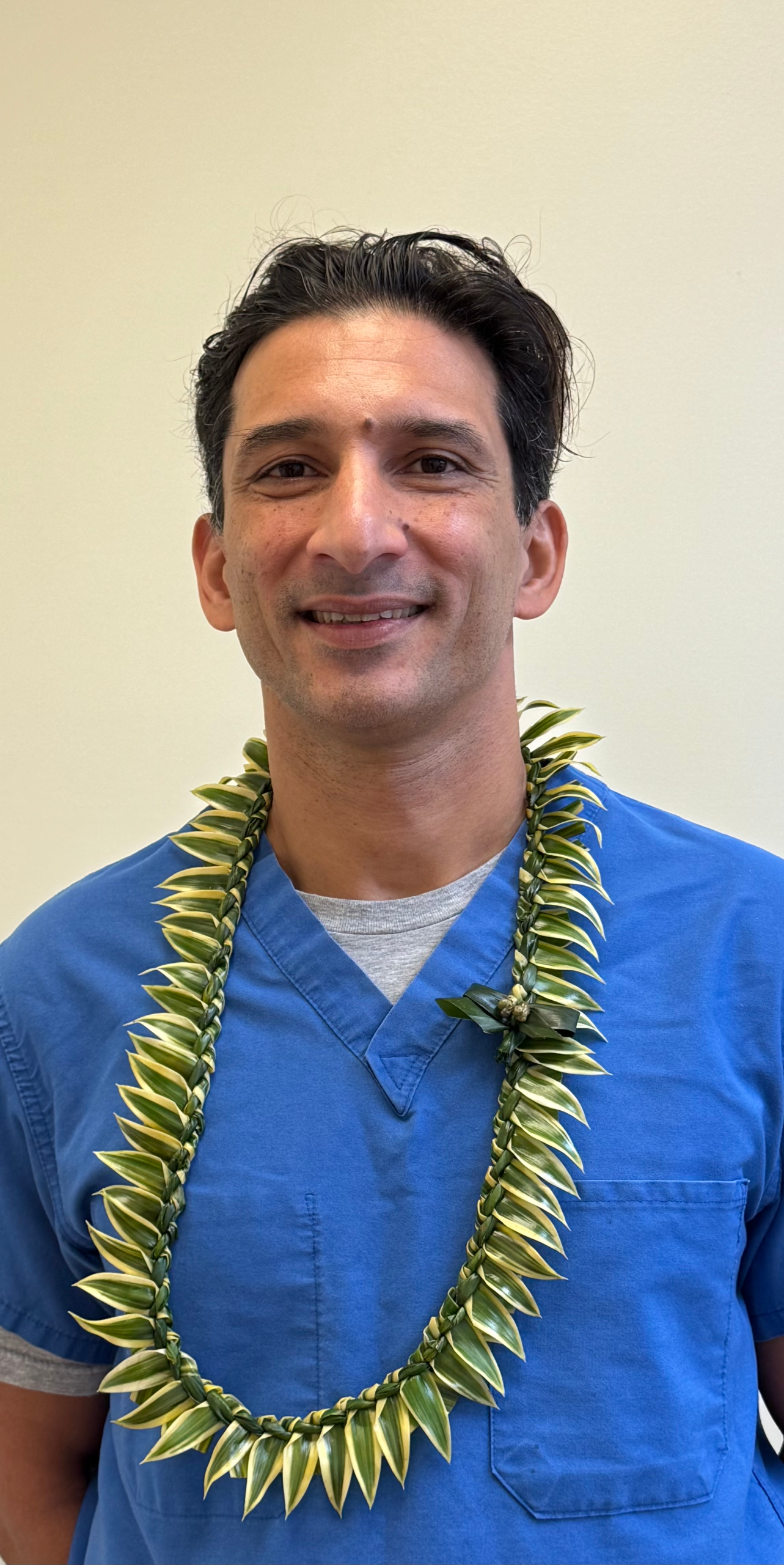
Dr. Vally practices at both the Kona and Hilo clinics. If you start treatment in Kona and your job moves to the east side, you continue with the same doctor who knows your case, your injury, and your treatment history. No re-explaining your story to a new provider. No fragmented medical records. This continuity matters for treatment outcomes and for the strength of your workers' comp documentation.
| Kona Clinic (West Side) | Hilo Clinic (East Side) |
|---|---|
| Address: 81-6587 Mamalahoa Hwy, Kealakekua, HI 96750 | Address: 82 Puuhonu Pl STE 202-203, Hilo, HI 96720 |
| Serves: Kailua-Kona, Kealakekua, Captain Cook, Kohala Coast, Waikoloa, Waimea, South Kona | Serves: Hilo, Pahoa, Keaau, Kurtistown, Volcano, Hamakua Coast, Pepeekeo, Puna |
| Industries: Construction, Kona coffee, Kohala Coast resorts, Kawaihae Harbor, Parker Ranch | Industries: Hilo Harbor, Hamakua agriculture, macadamia, HVNP (OWCP), Puna construction, County of Hawaii |
| Treatments: PRP, epidural injection, facet injection, trigger point injection, nerve block, HBOT, IR sauna (Kona exclusive), PENS/TENS | Treatments: PRP, epidural injection, facet injection, trigger point injection, nerve block, HBOT, PENS/TENS |
| Hours: Mon-Fri 8am-4pm | Hours: Mon-Fri 8am-4pm |
| Phone: (808) 935-6353 | Phone: (808) 935-6353 |
| From | Drive Time |
|---|---|
| Kailua-Kona | ~20 minutes |
| Captain Cook / South Kona | ~10 minutes |
| Kohala Coast (Waikoloa, Mauna Lani) | ~35 minutes |
| Waimea / Parker Ranch | ~45 minutes |
| Kawaihae | ~40 minutes |
| From | Drive Time |
|---|---|
| Downtown Hilo | ~5 minutes |
| Keaau / Pahoa / Puna | ~20-30 minutes |
| Volcano / HVNP | ~35 minutes |
| Hamakua Coast (Pepeekeo, Papaikou) | ~15 minutes |
| Honokaa / North Hamakua | ~45 minutes |
| Condition | Common Big Island Causes | VMG Treatment |
|---|---|---|
| Lumbar disc herniation / sciatica | Construction lifting, coffee harvesting, harbor loading, ranch work | Epidural injection, facet injection, PRP, trigger point injection |
| Rotator cuff tear / tendinopathy | Overhead construction, resort housekeeping, harbor rigging, ranch fencing | Subacromial injection, PRP, trigger point injection, ultrasound diagnosis |
| Knee pain / bursitis / OA | Construction kneeling on lava rock, resort stair climbing, agriculture terrain, trail maintenance | Joint injection, PRP, trigger point injection |
| Carpal tunnel syndrome | Power tool vibration, coffee picking, repetitive gripping, processing equipment | Ultrasound-guided carpal tunnel injection, PRP |
| Tennis elbow / golfer's elbow | Hammering, drilling, coffee picking, machete work, harbor line handling | PRP (outperforms cortisone at 6-12 months), trigger point injection |
| Neck pain / whiplash | Overhead construction, sustained forward head posture, work-related auto accidents, crane operation | Cervical epidural, facet injection, trigger point injection, PRP |
| Hip pain / bursitis | Ladder climbing, sustained walking on hard surfaces, horseback riding, uneven terrain | Hip joint injection, trochanteric bursa injection, PRP |
| Plantar fasciitis | Standing on hard resort floors, walking volcanic terrain, coffee field work | PRP (repairs degenerated fascia), corticosteroid injection |
All injections are performed under real-time ultrasound guidance at both locations. All treatment is 100% opioid-free.
Every injury described in this guide is compensable under Hawaii workers' compensation, whether from a single incident or cumulative occupational exposure over months or years. Federal employees at Hawaii Volcanoes National Park, USPS facilities, and other federal installations are covered under OWCP.
The Big Island has fewer occupational medicine specialists than Oahu relative to its geographic size. Most injured workers end up at urgent care clinics or emergency rooms that stabilize the acute condition but don't manage the workers' compensation case. ER doctors don't write WC-2 reports with detailed occupational causation narratives. They don't submit treatment authorization requests. They don't coordinate with insurance carriers or write trade-specific work restrictions. The worker leaves with ibuprofen and a follow-up referral, and the WC case sits in limbo.
VMG exists on both sides of the island specifically to fill this gap. From the first visit, we take ownership of the entire WC case: WC-2 documentation with detailed occupational causation, treatment authorization requests with medical justification that gets approved, utilization review responses when carriers push back, trade-specific work restrictions, progress reports, and direct billing to the carrier. You never see a bill.
Coffee pickers, macadamia workers, ranch hands, and diversified farm workers develop injuries gradually over seasons and years. Insurance carriers argue these conditions are age-related rather than occupational. Under Hawaii law, if the demands of the job caused or substantially contributed to the condition, it is compensable regardless of whether there was a single incident. A coffee picker who develops lumbar disc degeneration from 10 years of sustained bending and carrying on volcanic slopes has an occupational injury. The medical documentation must connect the specific physical demands to the structural damage. Dr. Vally writes this level of detail because it determines whether the claim is approved or denied.
Your right to choose: Whether you work for a Kohala Coast resort, a Kona coffee farm, a construction GC, or the County of Hawaii, you choose your own treating physician. Your employer can suggest a provider. They cannot require one. If you're being pressured, or if your current treatment isn't working, you can switch to VMG at any point during your case.
Two clinics. Both sides of the island. Specialized occupational medicine with opioid-free interventional treatment, comprehensive WC documentation, and the same physician at every visit. Whether you're in Kona or Hilo, VMG is the Big Island's workers' comp specialist.
Start Your Intake →(808) 935-6353 • Mon-Fri 8am-4pm
Kona: 81-6587 Mamalahoa Hwy, Kealakekua • Hilo: 82 Puuhonu Pl STE 202-203
Kona Clinic • Hilo Clinic • Construction Worker Back Pain • Sciatica Treatment • Rotator Cuff Treatment • Neck Pain & Whiplash • Tennis Elbow Treatment • Carpal Tunnel Treatment • Hip Pain Treatment • Knee Pain Treatment • Plantar Fasciitis Treatment • PRP Therapy • Injection Therapy • IR Sauna Therapy • Injury Not Getting Better? • Your First WC Appointment • Right to Choose Your Doctor • Workers' Compensation Guide
Disclaimer: This article is provided for informational and educational purposes only and does not constitute medical or legal advice. Injury severity, treatment options, and outcomes vary between individuals. For diagnosis and treatment, consult a qualified physician. For questions about your workers' compensation rights, consult a Hawaii workers' compensation attorney.