How Kauai's resort workers, construction crews, agricultural employees, and federal personnel can get specialized injury treatment and pain management without leaving the island.
Kauai's economy runs on the physical labor of its residents. From the housekeepers and groundskeepers at Poipu's luxury resorts to the construction workers building new developments along the South Shore, from the farmworkers cultivating taro and coffee in Hanalei and Kilauea to the federal employees maintaining operations at the Pacific Missile Range Facility in Barking Sands, the Garden Isle's workforce faces occupational injury risks that are unique to this island's industries and geography.
The challenge for injured Kauai workers has always been access. For years, specialized occupational medicine and pain management care meant flying to Oahu, an expensive and exhausting trip for someone already dealing with pain. That is no longer necessary. This guide covers the most common workplace injuries on Kauai by industry, your rights under Hawaii's workers' compensation system, what treatment options are available right here on the island, and special considerations for federal workers filing through OWCP.
Kauai's economy is heavily concentrated in a handful of industries, each with its own distinct injury patterns. Understanding which injuries are most common in your line of work matters because it affects how your workers' compensation claim is evaluated, what treatment plan makes sense, and how quickly you can realistically return to full duty.
| Industry | Major Employers | Most Common Injuries |
|---|---|---|
| Resort & Hospitality | Grand Hyatt Kauai (Poipu), 1 Hotel Hanalei Bay, Sheraton Kauai (Coconut Beach & Koloa), Koloa Landing, Westin Princeville, Marriott Kauai Beach Club (Lihue) | Chronic lower back pain from repetitive bending and lifting (housekeeping), shoulder and rotator cuff injuries from overhead reaching (maintenance), knee injuries from standing on hard surfaces for extended shifts, wrist and hand injuries from repetitive food prep (kitchen staff), slip and fall injuries on wet pool decks and kitchen floors |
| Construction | South Shore residential development, Princeville renovations, commercial projects, road and infrastructure crews | Lumbar disc injuries from heavy lifting, shoulder impingement from overhead framing and roofing, knee injuries from climbing and kneeling, hand and wrist trauma from power tools, fall injuries from ladders and scaffolding, heat illness |
| Agriculture | North Shore and East Side taro farms, Kilauea coffee operations, diversified ag operations, nurseries, ranches | Chronic back and hip pain from bending and harvesting, repetitive strain injuries in hands and wrists, shoulder injuries from overhead pruning, knee degeneration from uneven terrain, pesticide and chemical exposure |
| Federal & Military | Pacific Missile Range Facility (PMRF/Barking Sands), Lihue federal buildings, USPS carriers and clerks, TSA at Lihue Airport, National Tropical Botanical Garden | Repetitive motion injuries (mail carriers, equipment operators), noise-induced hearing loss (PMRF operations), back injuries from lifting and carrying (postal workers), ergonomic injuries from desk and lab work, vehicle accidents on military ranges |
| Harbor, Retail & Services | Nawiliwili Harbor, Lihue Airport ground crews, Kukui Grove Shopping Center, grocery stores, auto repair, healthcare facilities | Lifting injuries from freight and cargo handling, repetitive strain from checkout and stocking, slip and fall injuries, vehicle and equipment-related injuries, chronic pain from standing all day |
Kauai is the smallest of Hawaii's four major islands, with a population of roughly 73,000. The medical infrastructure reflects that size. For decades, injured workers on Kauai who needed specialized pain management or occupational medicine had limited options: see a generalist on-island who may not have experience with workers' compensation cases, or fly to Oahu for specialist care.
Flying to Oahu for medical treatment is not just inconvenient. It is a genuine barrier to recovery. A round trip from Lihue to Honolulu takes an entire day when you factor in airport time, the flight, ground transportation, the appointment, and the return trip. For a worker who is already in pain, that travel itself can aggravate the injury. Sitting in an airplane seat with a lumbar disc herniation or a shoulder impingement is not therapeutic. And the cost of flights, rental cars, and potentially overnight stays adds up quickly, especially for a worker who is on reduced wages from temporary disability benefits.
Workers' compensation does provide for travel reimbursement when a claimant must travel to receive medical care, but the process of getting reimbursed is slow and the financial burden falls on the worker upfront. The practical result is that many Kauai workers either delay treatment, settle for less specialized care, or stop going to appointments altogether. All three of those outcomes lead to worse medical results and weaker workers' comp claims.
The bottom line: Specialized occupational medicine care should not require an inter-island flight. Kauai workers deserve the same level of treatment that workers on Oahu take for granted. Vally Medical Group's Lihue clinic at 2978 Haleko Road exists specifically to fill this gap, providing advanced pain management and workers' comp care right here on the Garden Isle.
Hawaii's workers' compensation law provides strong protections for injured workers regardless of which island you live and work on. Here are the key rights that every Kauai worker should understand.
Hawaii law gives you the right to choose your own treating physician. You can see any licensed physician practicing on the island where you reside. When your employer hands you a list of "approved" clinics, that list is a suggestion, not a requirement. You are free to select a doctor who specializes in your type of injury and who has experience navigating the workers' compensation system.
This matters because your treating physician controls nearly every aspect of your claim. Your doctor determines your diagnosis, prescribes your treatment, writes your work restrictions, decides when you have reached maximum medical improvement, and provides the medical documentation that the insurance carrier uses to evaluate your claim. A doctor who understands the specific demands of resort housekeeping, construction framing, or USPS mail delivery can write work restrictions that actually make sense for your job, rather than generic restrictions that your employer does not know how to implement.
Hawaii is one of the few states that places no monetary limit on medical treatment for work injuries. You are entitled to all reasonable and necessary medical care related to your injury for as long as that care is needed. Your treating physician cannot bill you directly for treatment related to a covered work injury. All bills go to the workers' compensation insurance carrier.
If you are temporarily unable to work because of your injury, temporary total disability (TTD) benefits pay 66.67% of your average weekly wages up to the state maximum. Benefits begin after a three-day waiting period. If you can return to light duty but earn less than your pre-injury wages, temporary partial disability (TPD) benefits pay 66.67% of the difference.
For a complete breakdown of all benefit types including permanent disability, disfigurement, vocational rehabilitation, and death benefits, see the Hawaii Workers' Compensation Complete Guide.
Understanding the medical details of your injury helps you have better conversations with your doctor, ask the right questions, and understand why certain treatments are recommended over others.

The most common work injury on Kauai, across every industry. Resort housekeepers who bend and twist hundreds of times per shift, construction workers who lift framing lumber and concrete forms, agricultural workers who harvest in stooped positions, and mail carriers who shoulder heavy bags all share the same vulnerable anatomy: the lumbar spine.
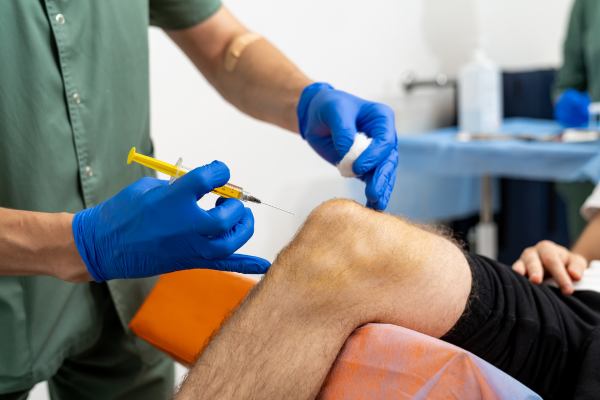
When pain radiates down the leg, causes numbness or tingling, or persists for more than a few weeks, that typically indicates a disc herniation, nerve compression, or facet joint injury that requires more than anti-inflammatory medication. Treatment options include targeted injection therapy to reduce inflammation at the nerve root, PRP therapy to promote healing in damaged disc and ligament tissue, and nerve blocks to interrupt chronic pain signals. These interventional approaches address the structural source of the problem rather than masking symptoms with medication.
Overhead work is a constant in Kauai's dominant industries. Hotel maintenance workers reach overhead to change fixtures and perform repairs. Construction workers frame walls and install roofing. Agricultural workers prune trees and harvest fruit above head height. All of this sustained overhead activity puts enormous stress on the rotator cuff, a group of tendons that stabilize the shoulder joint.
Rotator cuff tendinopathy and impingement develop gradually, and workers often dismiss early symptoms as "just a sore shoulder." By the time the pain becomes severe enough to seek care, the tendon damage may be significant. Early intervention with regenerative treatments like PRP can often prevent progression to a full tear that would require surgical repair.
Workers who spend long hours kneeling (construction workers laying tile or installing baseboards), standing on hard surfaces (hotel front desk staff, kitchen workers, retail employees), or navigating uneven terrain (agricultural workers, groundskeepers) develop knee injuries including meniscus tears, patellar tendinopathy, and progressive joint degeneration. These injuries are often aggravated by the fact that Kauai's terrain is naturally uneven, and many job sites are outdoors on surfaces that are not level.
Carpal tunnel syndrome, tendinitis, and repetitive strain injuries in the hands and wrists are common among Kauai workers who perform the same motions thousands of times per shift. Kitchen workers who chop and prep, cashiers who scan and bag, mail carriers who grip and sort, and equipment operators who use vibrating tools are all at elevated risk. These injuries develop over time, and many workers are unaware that cumulative repetitive strain injuries are fully covered under Hawaii workers' compensation. You do not need a single accident to file a claim. If the repetitive demands of your job caused or contributed to your condition, that is a compensable occupational injury.
One of the biggest misconceptions among Kauai workers is that advanced pain management requires flying to Oahu. The following treatments are available right here at Vally Medical Group's Lihue clinic, no inter-island travel required.
| Treatment | What It Does |
|---|---|
| PRP Therapy | Uses concentrated platelets from your own blood to stimulate tissue repair in damaged tendons, ligaments, and joints. Effective for rotator cuff tendinopathy, knee degeneration, tennis elbow, and chronic tendon injuries that have not responded to conservative treatment. |
| Targeted Injection Therapy | Precision-guided injections deliver anti-inflammatory medication directly to the source of pain, whether that is an inflamed nerve root, a degenerative facet joint, or a compressed disc. Provides targeted relief and diagnostic information about the pain source. |
| Nerve Blocks | Interrupts pain signals from specific nerves to provide relief for conditions like sciatica, cervical radiculopathy, and neuropathy. Used both as a treatment and as a diagnostic tool to identify exactly which nerve is generating the pain. |
| Hyperbaric Oxygen Therapy | Increases oxygen delivery to damaged tissues in a pressurized chamber, promoting faster healing for soft tissue injuries, chronic wounds, and post-surgical recovery. Non-invasive and drug-free. |
| Acupuncture | Stimulates specific points to reduce pain, improve circulation, and promote natural healing. Effective for headaches, muscle pain, nerve pain, and chronic musculoskeletal conditions. Often used in combination with other treatments. |
| PENS/TENS Therapy | Electrical stimulation applied to peripheral nerves to modulate pain signals. Non-invasive, drug-free, and particularly useful for neuropathic pain and chronic pain conditions that have not responded to other treatments. |
Every treatment available at Vally Medical Group's Lihue clinic is opioid-free. The goal is to treat the source of pain through regenerative and interventional medicine rather than prescribing narcotics that mask symptoms, carry addiction risk, and can complicate workers' compensation claims. An opioid-free treatment record eliminates the defense strategy of attributing ongoing symptoms to medication dependence rather than legitimate injury.
Kauai is home to the Pacific Missile Range Facility (PMRF) at Barking Sands, the world's largest instrumented multi-environment range. PMRF supports missile testing, space tracking, and military training operations, employing hundreds of civilian federal workers, military personnel, and defense contractors. Beyond PMRF, Kauai has federal employees at the Lihue USPS distribution center, TSA operations at Lihue Airport, the National Tropical Botanical Garden, and various federal agency field offices.
If you are a federal employee injured on the job, your workers' compensation claim is filed through the Office of Workers' Compensation Programs (OWCP), not Hawaii's state workers' comp system. The two systems have fundamentally different documentation requirements, and many medical providers on Kauai are not experienced with OWCP's specific demands.
OWCP claims require detailed medical narratives that explain the biomechanical relationship between your specific work duties and your injury. A narrative that says "patient has low back pain, recommend treatment" will not be accepted. The claims examiner needs to understand exactly what physical activities your job requires, how those activities caused or contributed to the anatomical injury, and why the recommended treatment is medically necessary. For example, a mail carrier's narrative might need to describe the weight of mail bags, the frequency of lifting, the duration of walking routes on uneven terrain, and how those cumulative stresses caused a specific disc herniation at a specific spinal level.
Vally Medical Group has extensive experience with OWCP claims for federal workers across all of Hawaii's Neighbor Islands. The Lihue clinic treats PMRF employees, postal workers, TSA agents, and other federal personnel and understands the documentation standards that OWCP examiners require. For more on federal workers' comp, see the OWCP Kauai guide.
Not every doctor on Kauai is equipped to handle workers' compensation cases. The medical care itself is only part of the picture. A good workers' comp doctor also needs to manage the administrative and documentation requirements that keep your claim moving forward. Here is what matters.
Workers' comp documentation experience. Your doctor must file a Physician's Report (Form WC-2) within seven days of your first visit and provide ongoing medical reports throughout your treatment. Missed reports, vague language, or incomplete documentation can delay treatment authorizations and jeopardize benefits. A doctor who treats workers' comp patients regularly knows what the insurance carrier needs to see and provides it proactively.
Understanding of your specific job demands. Generic work restrictions like "no heavy lifting" are nearly useless to an employer trying to assign you modified duties. A doctor who understands that a hotel housekeeper's job involves repetitive bending, pushing a loaded cart, lifting mattresses, and reaching overhead can write restrictions that are specific enough for your employer to actually implement. This specificity also strengthens your claim documentation.
Advanced treatment capabilities. If your doctor's treatment plan consists only of prescriptions and follow-up appointments, you may not be receiving the full range of care available. Interventional and regenerative treatments like PRP, nerve blocks, and targeted injections can address the underlying structural damage rather than simply managing pain symptoms.
Provider continuity. Seeing the same doctor every visit matters. A physician who examines you regularly notices subtle changes in your condition, such as gradual improvement in range of motion or new neurological symptoms, that a rotating provider reading your chart for the first time will miss. Continuity of care produces better medical outcomes and stronger documentation for your claim.
Insurer coordination. A significant portion of workers' comp treatment involves non-medical work: calling the insurance adjuster, submitting treatment authorizations, responding to utilization review requests, and writing supplemental reports when the carrier requests them. A practice that handles this administrative work internally takes that burden off you and keeps your treatment from stalling.
Vally Medical Group's Lihue clinic at 2978 Haleko Road provides specialized workers' compensation treatment and opioid-free pain management for Kauai workers. We accept Hawaii workers' comp, OWCP federal claims. Same doctor every visit.
Visit Our Lihue Clinic Page →(808) 935-6353 • Monday–Friday 8am–4pm • 2978 Haleko Rd Suite B, Lihue
Hawaii Workers' Compensation Complete Guide • Kauai Hospitality Worker Injury Care • OWCP Doctor on Kauai • PRP Therapy on Kauai • Chronic Pain Treatment Hawaii • Vally Medical Group Lihue Clinic • WC-1 Form Guide
Disclaimer: This article is provided for informational and educational purposes only and does not constitute legal or medical advice. Workers' compensation laws and regulations are subject to change, and individual claims depend on the specific facts of each case. For questions about your legal rights, consult a Hawaii workers' compensation attorney. For medical concerns, consult a qualified physician. Employer listings are for illustrative purposes and do not imply any specific relationship with Vally Medical Group.