Maui's two largest workforces are its two most physically demanding: resort hospitality and construction. Both produce injuries at elevated rates. Both are underserved by specialized occupational medicine on the island. Here's where Maui workers can get real treatment without flying to Oahu.
Maui's economy runs on two physically demanding industries: tourism and construction. The resort corridor from Wailea through Kaanapali employs thousands of hospitality workers whose bodies absorb the cumulative damage of making beds, climbing stairs, carrying trays, and standing on hard floors for 8-12 hour shifts. The construction sector, supercharged by the Lahaina rebuild and ongoing South Maui development, employs thousands more workers performing overhead framing, concrete work, roofing, and heavy lifting under deadline pressure in tropical heat.
Both industries produce injuries that require specialized treatment. Both industries have employers who steer injured workers toward preferred providers. And Maui has fewer specialized occupational medicine options than Oahu or the Big Island, which means injured workers either accept whatever care their employer directs them to, or fly to Oahu for a specialist. Neither outcome is acceptable.
The Lahaina rebuild is the largest construction project in Maui's history. Thousands of workers are rebuilding an entire town from the ground up: foundations, framing, roofing, electrical, plumbing, HVAC, concrete, finish carpentry, and landscaping across hundreds of lots simultaneously. The scale is unprecedented for an island this size, and the injury rate reflects it.
What makes the Lahaina rebuild particularly dangerous for workers' bodies is the combination of compressed timelines, extended shifts (10-12 hours common), tropical heat and humidity that accelerates fatigue, and the emotional weight of rebuilding a community after tragedy. Fatigued workers make mistakes. Dehydrated workers lose concentration. Extended shifts mean the body accumulates damage past its daily recovery capacity.
| Trade | Lahaina Rebuild Activities | Common Injuries |
|---|---|---|
| Framing & Carpentry | Wall assembly, roof framing, overhead nailing, carrying lumber and sheet goods up slopes, repetitive impact tool use | Lumbar disc herniations from lifting, rotator cuff tears from overhead work, carpal tunnel from impact tool vibration |
| Concrete & Foundation | Pouring and finishing slabs, rebar tying, form work, operating vibrating equipment | Sciatica from sustained bending, knee bursitis from kneeling on fresh slabs, whole-body vibration injuries |
| Roofing | Carrying bundles up ladders, sustained overhead work on steep pitches, operating nail guns in awkward positions | Shoulder injuries from overhead carrying, cervical strain from sustained extension, fall injuries |
| Electrical & Plumbing | Overhead wiring in ceiling cavities, crawling under structures, sustained bent postures in tight spaces | Cervical and lumbar strain from awkward positioning, carpal tunnel from repetitive gripping, knee injuries from crawling |
| Landscaping & Site Work | Grading, planting, irrigation installation, operating mowers and trimmers, moving sod and soil | Plantar fasciitis from sustained standing on uneven terrain, back strains, hip injuries from repetitive bending |
Mainland workers on the Lahaina rebuild: Many construction workers on the Lahaina project came from the mainland specifically for this work. If you were hired to work on Maui and got injured on a Maui job site, Hawaii's workers' compensation law applies to your injury regardless of where your employer is based. You are entitled to treatment on-island and should not be told to fly home for medical care. VMG's Kihei clinic treats mainland workers under Hawaii WC the same as local workers.
Maui's resort corridor is one of the densest concentrations of luxury hospitality in Hawaii. The Grand Wailea, Four Seasons, Andaz, Fairmont Kea Lani, Marriott Wailea, Hotel Wailea, and the properties along the Kaanapali coast employ thousands of workers performing physically demanding jobs that produce injuries through cumulative overuse rather than single acute events.
Cumulative injuries are harder to document than acute ones, which is why they get denied more often. A housekeeper who develops rotator cuff tendinopathy from 3 years of overhead bed-making doesn't have a single incident date to point to. The carrier argues the condition is age-related. The claim gets denied. And the worker either gives up or accepts treatment through personal insurance (with copays and deductibles) for a condition that should be covered at 100% as a work injury.
| Role | Physical Demands | Common Injuries |
|---|---|---|
| Housekeeping | Making 14-16 beds per shift, vacuuming, scrubbing bathrooms, carrying heavy linen carts, climbing stairs in properties without service elevators | Rotator cuff injuries from overhead reaching, lumbar strain from bending and lifting, carpal tunnel from sustained gripping, knee pain from stair climbing |
| Groundskeeping | Mowing, trimming, hauling debris, climbing on steep landscaped slopes, palm frond removal overhead | Plantar fasciitis from sustained walking on hard surfaces, rotator cuff injuries from overhead tree work, hip injuries from uneven terrain |
| Banquet & Food Service | Carrying heavy trays (up to 30 lbs overhead), standing 8-10 hours on tile, rapid walking between kitchen and service areas | Cervical strain from overhead tray carrying, plantar fasciitis from sustained standing, lumbar strain from lifting tables and chairs |
| Maintenance | Plumbing repairs, electrical work, HVAC maintenance, painting, fixture replacement in cramped spaces | Full spectrum of construction-type injuries: back, shoulder, neck, knee, and wrist injuries from the same mechanisms that affect construction workers |
| Spa & Pool Staff | Sustained arm elevation during treatments, lifting pool equipment, cleaning pool decks, standing on wet hard surfaces | Rotator cuff and shoulder strain from sustained arm elevation, slip and fall injuries on wet surfaces, plantar fasciitis from standing on pool decks |
Large resort properties often have established relationships with specific medical providers and direct all injured workers to those clinics. This is legal as a suggestion but not as a requirement. Under Hawaii law (HRS 386-21), you choose your own treating physician. Your employer can hand you a card for their preferred clinic. You can put that card in your pocket and call VMG instead.
Maui has a provider problem that other islands don't face to the same degree. There are fewer occupational medicine specialists on Maui than on Oahu or the Big Island, which creates three consequences for injured workers.
Employer steering is more effective. When there are limited options, telling an injured worker "go to this clinic" feels less like a suggestion and more like the only option. Workers don't realize they have a choice because the alternative isn't visible to them.
Treatment approaches may be conservative by default. General practitioners manage work injuries with rest, oral medication, and generic physical therapy referrals. They may not offer or be familiar with interventional treatments like ultrasound-guided injections, PRP therapy, or nerve blocks that target the structural source of pain. The worker sits in a cycle of rest-medicate-PT that stretches for months without addressing the tissue damage.
Documentation quality affects authorization rates. Carriers deny treatment authorizations when the requesting physician's documentation doesn't meet utilization review standards. A physician who sees a handful of WC patients per month may not write the detailed medical justification that carriers require. The treatment gets denied. The worker assumes the carrier is being unreasonable. In reality, the documentation was the problem, and it's fixable by switching providers.
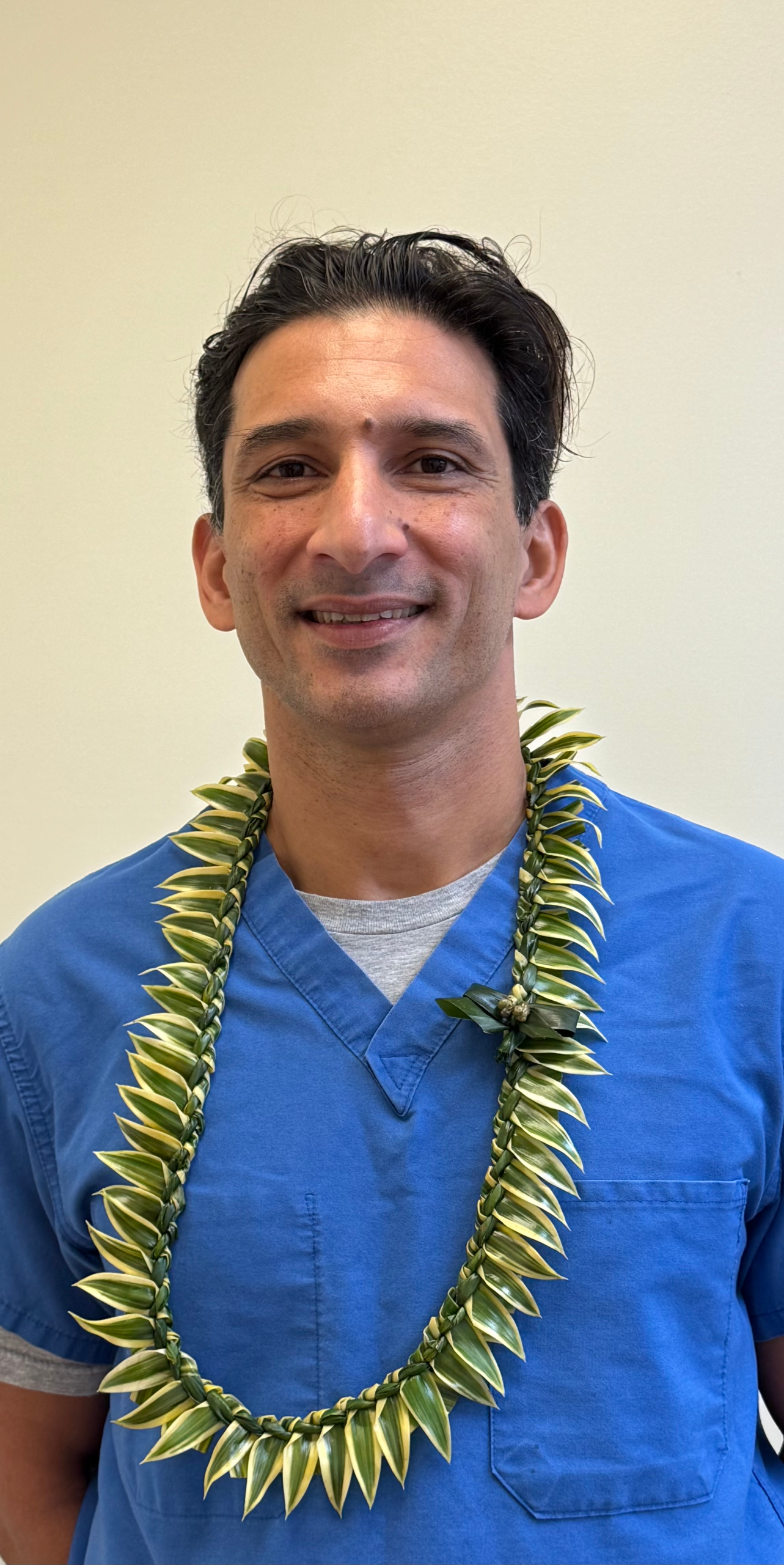
VMG's Kihei clinic exists so Maui workers have access to the same specialized occupational medicine available at our Big Island and Kauai locations. Every treatment is opioid-free. Every injection is performed under ultrasound guidance. Every visit is with Dr. Vally personally.
| Treatment | What It Does |
|---|---|
| PRP Therapy | Concentrated growth factors from your own blood injected into damaged tendons, joints, or discs to stimulate structural tissue repair. Effective for rotator cuff tendinopathy, knee osteoarthritis, plantar fasciitis, hip bursitis, and chronic ligament injuries. |
| Epidural Steroid Injection | Corticosteroid delivered directly to the epidural space around compressed spinal nerve roots. First-line interventional treatment for disc herniations causing sciatica or cervical radiculopathy. |
| Joint & Bursa Injection | Corticosteroid injected into inflamed joints or bursae under ultrasound guidance. Rapid pain relief within 24-48 hours. Also confirms the injected structure as the pain source. |
| Trigger Point Injection | Releases contracted muscle bands that develop secondary to injury. Addresses muscle spasm and referred pain patterns. |
| Nerve Block | Targeted anesthetic delivered to specific nerves to interrupt pain signals and confirm which nerve is generating symptoms. |
| PENS/TENS | Electrical nerve stimulation that modulates pain signals. Non-invasive, drug-free. Effective for neuropathic pain and chronic musculoskeletal conditions. |
Note: HBOT is not available at the Kihei location but is available at our Kona, Hilo, and Lihue clinics.
Every injury described in this article is compensable under Hawaii workers' compensation, whether acute or cumulative.
The Lahaina rebuild involves dozens of general contractors and hundreds of subcontractors. Construction workers frequently move between subs or work for multiple employers in the same month. When a cumulative injury develops, the question of which employer's WC coverage is responsible gets complicated. This is a legal question, not a medical one. What matters medically is that the injury is documented as occupational, the physical demands are described in detail, and the treatment begins regardless of which carrier ultimately accepts the claim.
The challenge for resort workers is proving that a cumulative condition is work-related rather than age-related. The medical documentation must establish the specific occupational exposure: how many beds per shift, how many stairs, how many hours of sustained standing, the surface types, the lifting weights, and the biomechanical mechanism connecting those demands to the diagnosed condition. Generic notes that say "patient has shoulder pain from work" get denied. Detailed documentation that connects 14 beds per shift of overhead reaching to supraspinatus compression gets approved.
What VMG handles: WC-2 physician's reports with detailed occupational causation narratives, treatment authorization requests with specific medical justification, utilization review responses when carriers challenge treatment, trade-specific work restrictions (not generic "light duty"), progress reports, and direct billing to the WC carrier. Here's what to expect at your first visit.
| Detail | Information |
|---|---|
| Location | 310 Ohukai Rd Suite 309, Kihei, HI 96753 |
| Phone | (808) 935-6353 |
| Hours | Monday through Friday, 8am to 4pm |
| Insurance | All Hawaii workers' compensation carriers and OWCP for federal employees |
| Treatments | PRP, epidural injection, facet injection, trigger point injection, joint/bursa injection, nerve block, PENS/TENS. All ultrasound-guided. |
| From Wailea/Makena | ~10 minutes |
| From Kahului/Wailuku | ~20 minutes |
| From Lahaina | ~45 minutes via Honoapiilani Hwy |
| From Kaanapali | ~40 minutes |
Vally Medical Group's Kihei clinic provides specialized work injury treatment for Maui's resort and construction workers. Opioid-free. Ultrasound-guided. We handle the workers' comp documentation so you can focus on recovery.
Start Your Intake →(808) 935-6353 • Monday–Friday 8am–4pm • 310 Ohukai Rd Suite 309, Kihei
Kihei Clinic • Lahaina Recovery Workers Health Guide • Construction Worker Back Pain • Rotator Cuff Treatment • Knee Pain Treatment • Plantar Fasciitis Treatment • Carpal Tunnel Treatment • Injection Therapy • PRP Therapy • Injury Not Getting Better? • Right to Choose Your Doctor • Workers' Compensation Guide
Disclaimer: This article is provided for informational and educational purposes only and does not constitute medical or legal advice. Injury severity, treatment options, and outcomes vary between individuals. For diagnosis and treatment, consult a qualified physician. For questions about your workers' compensation rights, consult a Hawaii workers' compensation attorney.