How lifting, falls, vibration, and repetitive bending damage the spine on construction sites. The specific injuries, the non-surgical treatments that work, and what your workers' comp claim needs to get approved.
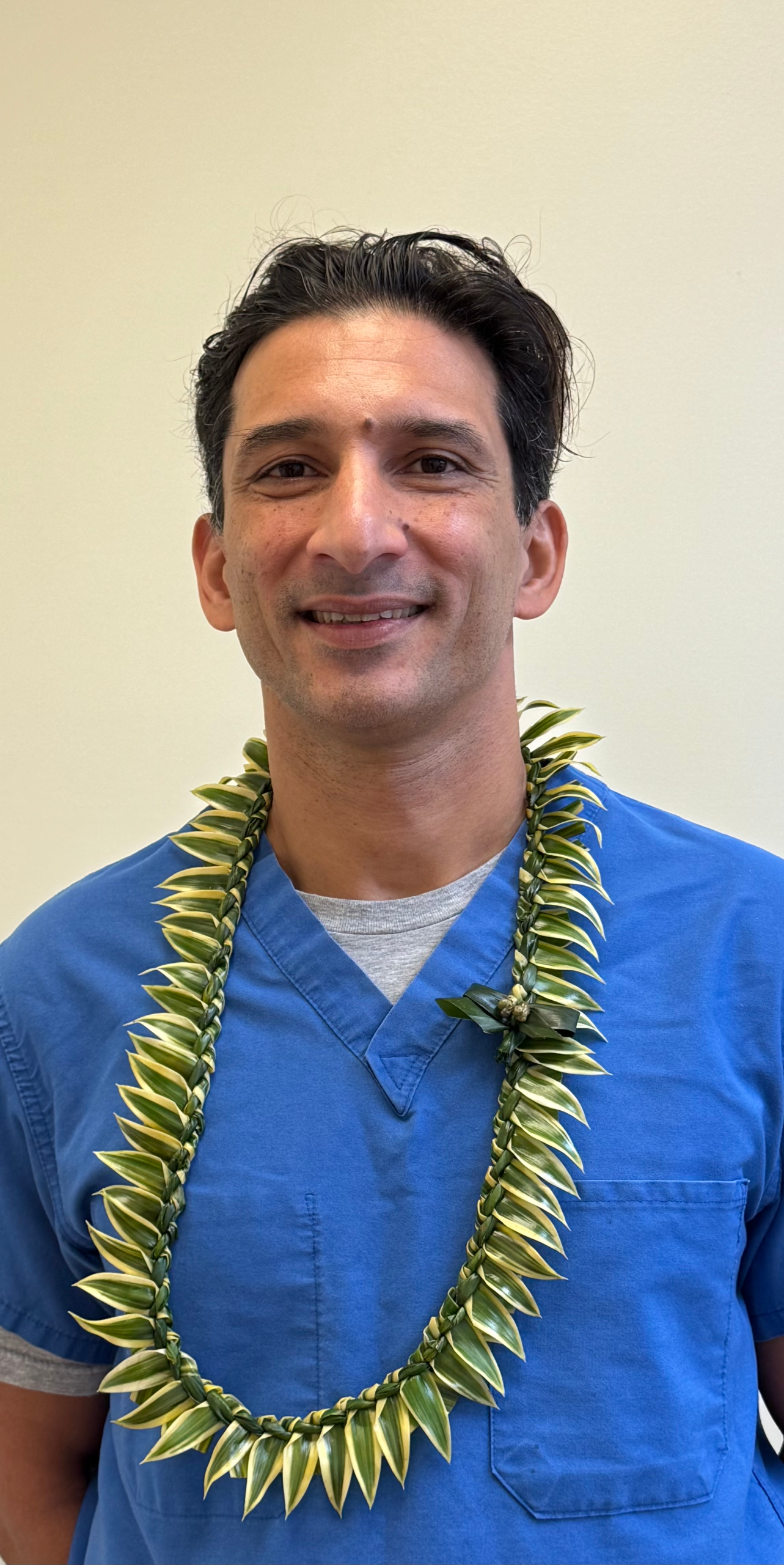
Construction is the most physically demanding industry in Hawaii and the leading source of back injury workers' compensation claims on the Neighbor Islands. The combination of heavy lifting, awkward postures, whole-body vibration from equipment, sudden impacts from falls, and sustained spinal loading over years produces a range of back injuries that no amount of "lift with your legs" training can fully prevent.
The lumbar spine (lower back) absorbs the greatest mechanical load during construction work. When you lift a 60-pound bag of concrete from the ground, the compressive force on your L4-L5 and L5-S1 discs can exceed 1,000 pounds. Do that 50 times in a shift, five days a week, for months or years, and the disc tissue degrades. The outer annulus weakens. The inner nucleus pushes outward. Eventually, the disc bulges or herniates, compressing the nerve root that exits the spine at that level. That compression is what produces the shooting pain, numbness, and weakness that construction workers describe as "my back went out."
Construction back injuries aren't all the same. The mechanism of injury determines which structures are damaged, which determines the treatment. Understanding the difference matters because the wrong treatment for the wrong diagnosis wastes time, money, and extends the recovery period.
The most common mechanism. Lifting heavy materials (concrete, lumber, drywall, roofing supplies, equipment) from ground level places enormous compressive and shearing forces on the lumbar discs, especially when the load is held away from the body, when the lift involves twisting, or when the weight is unexpected.
What gets damaged: Intervertebral discs (bulging, herniation), facet joints (sprains, fractures), paraspinal muscles (strains, tears). The classic presentation is a worker who felt a "pop" or sudden sharp pain in the low back during a lift, followed by progressive pain, stiffness, and sometimes radiating leg pain (sciatica) if a disc herniation is compressing a nerve root.
Falls from ladders, scaffolding, roofs, and elevated platforms produce axial compression injuries (the spine is loaded from top to bottom on impact) and flexion-extension injuries (the spine whips forward and backward). Hawaii's construction sites present additional fall hazards: wet surfaces from rain, uneven volcanic terrain on undeveloped lots, and makeshift scaffolding on residential projects.
What gets damaged: Vertebral endplate fractures, burst fractures in severe falls, acute disc herniations, facet joint fractures, sacroiliac joint sprains. Fall injuries tend to be more structurally severe than lifting injuries and more likely to involve multiple spinal levels.
Operating heavy equipment (excavators, bulldozers, backhoes, jackhammers, plate compactors, concrete saws) transmits vibration through the seat or handles directly into the spine. Chronic whole-body vibration exposure accelerates disc degeneration, weakens the annular fibers of the disc, and increases the risk of herniation. The effect is cumulative and often doesn't produce symptoms until years of exposure have degraded multiple disc levels.
What gets damaged: Multi-level disc degeneration, accelerated disc desiccation (loss of disc height and hydration), chronic facet joint inflammation. The challenge with vibration injuries is proving causation: the damage develops gradually, and insurance carriers argue it's age-related degeneration rather than occupational exposure.
Concrete finishing, rebar tying, electrical rough-in at floor level, plumbing, tile setting, and any task performed while bent forward at the waist loads the posterior elements of the lumbar spine repeatedly. The combination of flexion (bending forward) and rotation (twisting to reach) is the most damaging movement pattern for lumbar discs. One bend doesn't cause injury. Thousands of bends over months produce the same disc damage as a single heavy lift, just more slowly.
What gets damaged: Posterior disc bulging, annular tears, chronic facet arthropathy, myofascial pain from sustained paraspinal muscle contraction. These injuries present as a gradual onset of worsening back pain and stiffness rather than a single acute event.
The Lahaina rebuild has brought thousands of construction workers to Maui, many working extended shifts under deadline pressure on a massive scale. Framing crews, roofers, electricians, plumbers, and concrete workers are performing the most back-intensive construction tasks at elevated volume. If you are working on the Lahaina rebuild and developing back pain, it is a work injury. See our Lahaina Recovery Workers Health Guide for specific information about your situation.
| Diagnosis | What It Is | How Construction Causes It |
|---|---|---|
| Lumbar disc herniation | The inner nucleus of a spinal disc pushes through a tear in the outer annulus, often compressing an adjacent nerve root | Heavy lifting with twisting, falls, cumulative compressive loading. Most common at L4-L5 and L5-S1 levels |
| Disc bulge | The disc expands beyond its normal boundary without a complete annular tear. Less severe than herniation but still painful | Repetitive loading, sustained bending, vibration exposure. Often the precursor stage before full herniation |
| Facet joint arthropathy | Inflammation and degeneration of the small joints connecting vertebrae, producing localized back pain that worsens with extension | Repetitive extension and rotation (looking up while overhead, twisting while lifting), vibration, chronic loading |
| Muscle strain / sprain | Tearing of paraspinal muscle or ligament fibers, ranging from micro-tears to significant structural damage | Sudden overexertion, awkward lifting, catching falling materials, working in sustained bent postures |
| Sciatica / radiculopathy | Nerve root compression causing pain, numbness, or weakness radiating from the back down one or both legs | Usually secondary to disc herniation or stenosis. The disc compresses the nerve root exiting the spine at that level |
| Spinal stenosis | Narrowing of the spinal canal that compresses the spinal cord or nerve roots, often at multiple levels | Accelerated by years of heavy loading, vibration exposure, and repetitive injury. More common in workers over 45 |
| SI joint dysfunction | Pain from the sacroiliac joint (where the spine meets the pelvis), often mimicking disc-related back pain | Asymmetric loading (carrying heavy materials on one side), falls onto the buttock, climbing ladders repeatedly |
The majority of construction back injuries respond to non-surgical interventional treatment. Surgery is typically reserved for large herniations causing progressive neurological deficit, cauda equina syndrome (a medical emergency), or documented failure to improve after 3-6 months of appropriate conservative care.
| Treatment | How It Treats Construction Back Injuries |
|---|---|
| Epidural Steroid Injection | The first-line interventional treatment for disc herniations and radiculopathy. Delivers corticosteroid directly into the epidural space under ultrasound guidance, reducing the inflammation around the compressed nerve root. Most construction workers with disc herniations experience significant relief within 3-7 days. A series of up to 3 injections may be needed depending on response. |
| Facet Joint Injection | For back pain originating from the facet joints rather than the discs. Corticosteroid and anesthetic injected directly into the inflamed facet joint under imaging guidance. Also serves a diagnostic purpose: if the injection relieves your pain, it confirms the facet joint as the source, which guides further treatment decisions. |
| Trigger Point Injection | Addresses the paraspinal muscle spasm that accompanies nearly every back injury. After a disc herniation or strain, the muscles surrounding the injury go into protective spasm that limits mobility and creates secondary pain. Trigger point injections release these contracted muscle bands so the spine can be mobilized and the primary injury can heal. |
| PRP Therapy | For chronic disc injuries and ligament damage that haven't healed with injection therapy alone. Concentrated growth factors from your own blood promote structural repair of damaged tissue. Emerging evidence supports PRP for disc annular tears and chronic ligament injuries that perpetuate spinal instability. |
| Selective Nerve Root Block | When imaging shows compression at multiple levels and the physician needs to identify which nerve root is generating the patient's symptoms. Critical for construction workers with multi-level disc disease from years of heavy loading: treatment targets the level that's actually causing symptoms rather than treating all levels unnecessarily. |
| Work Restriction Management | Dr. Vally writes specific, defensible work restrictions based on the diagnosis and the actual physical demands of your construction trade. Not generic "light duty" notes that your GC can't implement. Specific lifting limits, positional restrictions, duration limits, and equipment restrictions that protect you from re-injury while keeping you productive in a modified capacity when possible. |
Why opioid-free matters for construction workers: Opioid pain medication impairs judgment, slows reaction time, and causes drowsiness. For a construction worker operating heavy equipment, working at height, or coordinating with a crew, opioid impairment is a safety hazard, not just a health concern. Beyond the safety issue, opioid use on a workers' comp claim gives the insurance carrier ammunition to argue that ongoing symptoms are related to medication dependence rather than the work injury. Interventional treatments that address the structural cause of pain avoid both problems.
Construction back injuries are among the most commonly filed and most commonly disputed workers' compensation claims in Hawaii. Insurance carriers have well-practiced strategies for denying or minimizing back injury claims, which is why the quality of your medical documentation determines the outcome more than the severity of your injury.
The cumulative vs. acute question. If you felt your back "go out" during a specific lift on a specific date, the claim is straightforward. But many construction back injuries develop cumulatively over months or years. The disc that herniates during a routine lift on Tuesday was weakened by thousands of previous lifts. Insurance carriers will argue the herniation was degenerative, not occupational. Under Hawaii law, cumulative injuries are compensable. If the demands of your construction job caused or substantially contributed to the disc damage, even if it happened gradually, it is a covered injury.
Pre-existing degeneration. MRI findings of "degenerative disc disease" are nearly universal in construction workers over 40. Carriers use these findings to argue the condition is age-related, not work-related. But research consistently shows that workers exposed to heavy loading, vibration, and repetitive bending develop disc degeneration faster and more severely than age-matched controls in sedentary occupations. The work didn't just coincide with the degeneration. It caused or accelerated it. The medical record must make this connection explicitly.
Multi-employer history. Construction workers often work for multiple general contractors and subcontractors over the course of a career. When a cumulative back injury is claimed, the question of which employer's coverage is responsible can become contentious. This is a legal question that your workers' compensation attorney navigates, but the medical documentation must establish the overall occupational exposure pattern regardless of which specific employer is named.
Your right to choose your doctor: If your GC or the insurance carrier hands you a list of "approved" doctors after a back injury, you are not required to see any of them. Under Hawaii law (HRS 386-21), you choose your own treating physician. The employer can suggest. They cannot require. If you're being pressured to see a specific provider, read our Right to Choose Your Doctor guide.
The difference between a construction back injury claim that gets approved and one that gets denied usually comes down to the treating physician's documentation. The medical narrative must include your specific construction trade and job duties (framing, concrete, roofing, electrical, plumbing); the specific physical demands of those duties (lifting weights, frequencies, postures, vibration exposure); objective examination findings and diagnostic imaging results; a clear medical opinion connecting the occupational exposure to the diagnosed condition; and an explanation of why the condition is occupational rather than purely age-related, especially in workers over 40.
VMG writes this level of documentation for every construction worker's compensation case. Dr. Vally understands the biomechanics of construction work, the specific spinal loading patterns of each trade, and the medical-legal language that claims examiners need to see. This documentation is what separates a well-supported claim from one the carrier can deny on a technicality.
For a complete overview of your rights and the claims process, see the Hawaii Workers' Compensation Complete Guide.
Getting back to the job site after a back injury is the goal, but rushing it causes re-injury. The return-to-work process for construction workers requires specific, progressive work restrictions that match the physical demands of your trade.
A "light duty" note that says "no heavy lifting" is useless on a construction site. What the GC needs is specific parameters: lifting limited to 25 pounds for the first two weeks, no overhead work, no sustained bending beyond 30 degrees, no exposure to whole-body vibration equipment. Those are restrictions a superintendent can implement. Generic notes get ignored or misinterpreted.
Dr. Vally writes trade-specific restrictions and adjusts them at regular intervals as your function improves. The return-to-work program transitions you from modified duty back to full duty in documented stages, protecting you from re-injury while demonstrating to the insurance carrier that you are making measurable progress.
| Location | Address | Back Injury Treatments Available |
|---|---|---|
| Kona | 81-6587 Mamalahoa Hwy, Kealakekua, HI 96750 | Epidural injection, facet injection, trigger point injection, PRP, nerve root block, IR sauna, PENS/TENS |
| Hilo | 82 Puuhonu Pl, Suite 202-203, Hilo, HI 96720 | Epidural injection, facet injection, trigger point injection, PRP, nerve root block, HBOT, PENS/TENS |
| Lihue | 2978 Haleko Rd Suite B, Lihue, HI 96766 | Epidural injection, facet injection, trigger point injection, PRP, nerve root block, HBOT, PENS/TENS |
| Kihei | 310 Ohukai Rd Suite 309, Kihei, HI 96753 | Epidural injection, facet injection, trigger point injection, PRP, nerve root block, PENS/TENS |
All locations accept Hawaii workers' compensation insurance and OWCP for federal employees. Call (808) 935-6353 to schedule an evaluation.
Vally Medical Group treats construction back injuries with opioid-free interventional medicine. Ultrasound-guided injections, PRP, and trade-specific work restrictions. We handle the workers' comp documentation. Four Neighbor Island locations.
Schedule Your Evaluation →(808) 935-6353 • Monday–Friday 8am–4pm • All locations
Sciatica Treatment Hawaii • Injection Therapy • PRP Therapy • Ultrasound-Guided Procedures • Return to Work Programs • Rotator Cuff Treatment • Right to Choose Your Doctor • Workers' Compensation Guide • Lahaina Rebuild Workers Guide
Disclaimer: This article is provided for informational and educational purposes only and does not constitute medical or legal advice. Back injury severity, treatment options, and outcomes vary between individuals. For diagnosis and treatment, consult a qualified physician. For questions about your workers' compensation rights, consult a Hawaii workers' compensation attorney.