Your employer terminated you after you filed a workers' comp claim. Or you got hurt and then got fired before you could file. Either way, you still have rights, your medical benefits don't disappear, and retaliation is illegal under Hawaii law.
This is the most important thing to understand: a workers' compensation claim is tied to the injury, not to your employment status at the time you pursue it. If you were injured while employed, the injury is compensable under your employer's WC policy regardless of whether you are still employed when you file the claim, receive treatment, or reach maximum medical improvement.
The carrier cannot deny your claim because you no longer work for the employer. They cannot stop paying for authorized treatment because you were fired. They cannot refuse to authorize new treatment because the employment relationship ended. The WC policy covered you at the time of the injury, and that coverage attaches to the injury, not to your job.
There are specific situations where the timing of the injury and the termination create complications, but none of them automatically eliminate your claim.
| Scenario | Your Rights | What to Do |
|---|---|---|
| Injured, filed claim, then fired | Your claim is active. Medical benefits continue. The carrier must honor authorized treatment. TTD wage benefits continue if your physician says you can't work. | Continue treatment. Document the termination date and stated reason. If the firing was motivated by your claim, consult a WC attorney about retaliation. |
| Injured, fired before filing | You can still file. Report the injury to the former employer and the DCD. The claim is valid as long as the injury occurred during employment. There is no deadline that would have expired in the short window between injury and termination. | File immediately. Contact the DCD to report the injury. See a physician to document the injury and establish the occupational connection. The medical record becomes critical evidence when the employer is no longer providing voluntary cooperation. |
| Cumulative injury discovered after termination | Cumulative injuries (e.g., carpal tunnel from years of repetitive work) can be filed after termination if the condition developed during employment. The date of injury is the date you became aware the condition was work-related. | See a physician who can document the occupational causation: connecting the diagnosed condition to specific work activities performed during your employment. This documentation is essential when the employer contests the claim. |
| Fired during modified duty | If you were on modified duty with active restrictions and were terminated, TTD benefits should resume because you cannot work (there is no employer to accommodate your restrictions). The carrier cannot argue you're able to work when the employer eliminated the job. | Notify your physician immediately. Have your physician document that you remain under active restrictions and cannot perform your regular duties. Contact the DCD if TTD benefits are not resumed. |
Hawaii Revised Statutes section 386-142 prohibits employers from firing, suspending, or discriminating against employees for filing a workers' compensation claim or exercising any right under the workers' compensation law. This is not a suggestion. It is a statute with penalties.
The difficulty is proving that the termination was motivated by the WC claim rather than by a legitimate business reason. Employers rarely say "we're firing you because you filed a workers' comp claim." They say "position eliminated," "performance issues," "restructuring," or "end of contract." The timing and circumstances are what reveal the true motivation.
If the pattern suggests retaliation, consult a Hawaii workers' compensation attorney. Retaliation claims can result in reinstatement, back pay, and penalties against the employer. The medical record from your treating physician also matters here: a well-documented treatment history showing a legitimate injury with ongoing medical needs makes it harder for the employer to argue the termination was unrelated to the claim.
Nothing changes medically. Your treating physician continues to be your treating physician. Authorized treatments continue to be authorized. The carrier continues to pay for treatment. You still choose your own doctor. Your former employer has no role in your medical care.
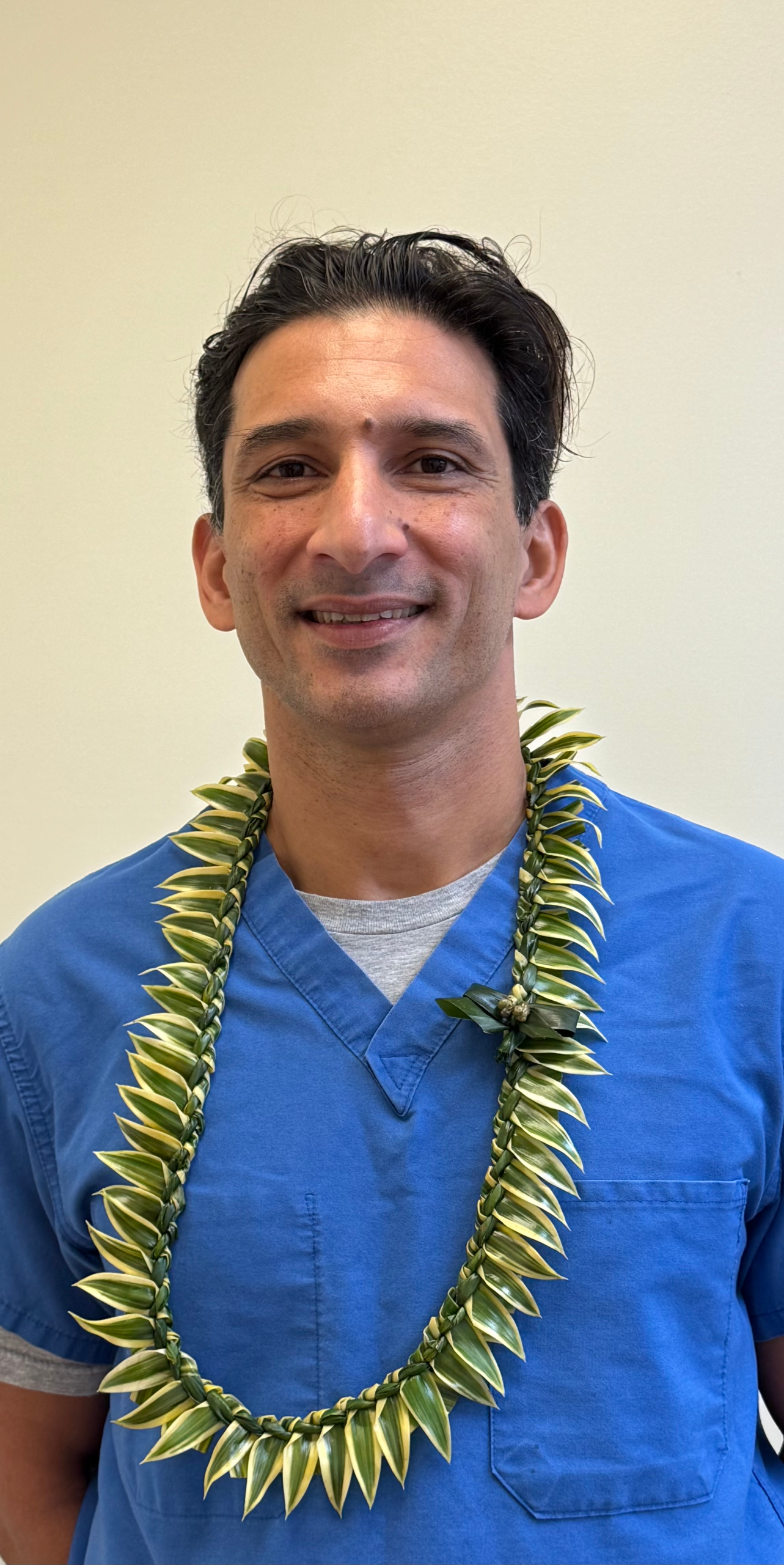
At VMG, terminated patients are treated identically to employed patients. Dr. Vally continues managing the case, writing progress reports, submitting treatment authorizations, and coordinating with the carrier. The only practical difference is that return-to-work restrictions are no longer directed to the former employer. Instead, the restrictions are documented for the record and for any future employer or vocational rehabilitation assessment.
Don't stop treatment because you were fired. This is the most common mistake terminated workers make. They assume that being fired ends their medical benefits, so they stop going to the doctor. The gap in treatment creates a gap in the medical record that the carrier will use to argue the injury resolved or that the condition is no longer related to work. Keep your appointments. Continue documenting. Your medical benefits continue as long as your physician says treatment is medically necessary.
Wage replacement benefits after termination depend on your medical status, not your employment status.
If your physician says you cannot work at all (TTD): Temporary total disability benefits continue at 66 2/3% of your pre-injury average weekly wages. The carrier pays these benefits regardless of whether you are employed, because the benefits are based on your inability to work due to the injury, not on your employment status.
If your physician says you can work with restrictions (modified duty): This is where termination creates a complication. When you were employed, your employer was providing modified work within your restrictions. After termination, there is no employer to provide modified work. In this situation, you may be entitled to TTD benefits because, although you could work with restrictions, there is no job available within those restrictions. Alternatively, you may be entitled to temporary partial disability (TPD) benefits if you find other work at lower wages. Discuss this with your physician and a WC attorney.
If you've reached maximum medical improvement (MMI): Any permanent impairment is rated, and permanent partial disability (PPD) benefits are calculated based on the impairment rating. These benefits are owed regardless of employment status.
| Step | What to Do |
|---|---|
| 1 | Document the termination. Save the termination letter. Note the date, time, who delivered it, and the stated reason. If verbal, write down exactly what was said while it's fresh. Save all text messages, emails, and written communications from the weeks before and after termination. |
| 2 | Continue medical treatment. Keep all scheduled appointments. Call VMG or your treating physician to inform them you were terminated. Start intake if you need a new physician. Your WC medical benefits have not changed. |
| 3 | File a claim if you haven't. If you were injured but hadn't filed a WC claim before being fired, file now. Contact the Hawaii Disability Compensation Division (DCD) at (808) 586-9161 or your local DCD office to report the injury. |
| 4 | Contact a workers' comp attorney. If you believe the termination was motivated by your injury or your WC claim, a WC attorney can evaluate the retaliation claim. Most Hawaii WC attorneys work on contingency. |
| 5 | Apply for unemployment benefits if eligible. Being on workers' comp does not automatically disqualify you from unemployment benefits in Hawaii. If you can work with restrictions but no job is available, you may be eligible for both TTD/TPD and unemployment. The rules are complex. Discuss with your attorney. |
| 6 | Do not sign anything without review. If your employer asks you to sign a severance agreement, release, or settlement, do not sign until a WC attorney reviews it. Some releases include language that waives your workers' comp rights. Once signed, those waivers may be enforceable. |
Being fired while injured creates a level of stress and uncertainty that goes beyond the injury itself. At VMG, we treat terminated patients regularly. The process is straightforward.
If you're already a VMG patient: nothing changes. Your next appointment is the same. Your treatment plan is the same. Dr. Vally documents your ongoing medical needs, continues submitting treatment authorizations, and adjusts the progress reports to reflect that the employer is no longer part of the return-to-work equation.
If you're a new patient coming to VMG after termination: call (808) 935-6353 or start intake online. Bring your termination letter, any existing medical records, and imaging. Dr. Vally evaluates your condition, establishes or confirms the diagnosis, and begins building the documentation trail that protects your claim going forward. If your previous physician's records are incomplete, Dr. Vally writes the supplemental documentation needed to support the claim.
| Location | Address | Phone |
|---|---|---|
| Kona | 81-6587 Mamalahoa Hwy, Kealakekua, HI 96750 | (808) 935-6353 |
| Hilo | 82 Puuhonu Pl, Suite 202-203, Hilo, HI 96720 | (808) 935-6353 |
| Lihue | 2978 Haleko Rd Suite B, Lihue, HI 96766 | (808) 935-6353 |
| Kihei | 310 Ohukai Rd Suite 309, Kihei, HI 96753 | (808) 935-6353 |
All locations accept all Hawaii workers' compensation insurance carriers and OWCP for federal employees. Your employment status does not affect your ability to receive treatment. By appointment only.
Your workers' comp claim survives your termination. Your medical benefits continue. Your right to choose your doctor is unchanged. VMG treats terminated patients the same as employed patients. Call or start intake online.
Schedule Your Evaluation →(808) 935-6353 • Monday–Friday 8am–4pm • All locations
Your Right to Choose Your Doctor • Claim Denied? • Returning to Work After an Injury • How Long Does Treatment Take? • Injury Not Getting Better? • Your First WC Appointment • Workers' Compensation Guide • WC-1 Form Guide
Disclaimer: This article is provided for informational and educational purposes only and does not constitute legal advice. Wrongful termination, retaliation claims, and workers' compensation benefits after termination involve legal questions that vary by circumstance. For specific questions about your termination or your workers' compensation rights, consult a Hawaii workers' compensation attorney. For medical evaluation and treatment, contact Vally Medical Group at (808) 935-6353.