You've been seeing a doctor for your work injury for weeks or months. The pain hasn't improved. You're doing everything you're told. And you're starting to wonder if this is just how it's going to be. It isn't. Here's why injuries stall and what to do about it.
This is the most common reason workers' comp injuries fail to improve, and it's the one that gets discussed the least. If the diagnosis is wrong, every treatment that follows is aimed at the wrong target. Months pass. Nothing improves. The carrier starts talking about maximum medical improvement. And the patient ends up with a permanent condition that was treatable all along.
The most frequent diagnostic errors in occupational medicine: hip pain diagnosed as lumbar spine pain (both produce buttock and thigh symptoms, but the treatment is completely different). Cervical radiculopathy diagnosed as carpal tunnel (both produce hand numbness, but the problem is in the neck, not the wrist). SI joint dysfunction diagnosed as a disc herniation (both produce low back and leg symptoms, but SI joint pain doesn't respond to epidural injections). Facet joint pain diagnosed as disc pain. Labral tears missed entirely because the hip joint was never examined.
A 10-minute evaluation doesn't catch these distinctions. A thorough initial evaluation with diagnostic ultrasound, specific clinical tests, and a detailed history does. If your current doctor spent 10 minutes with you at the first visit and told you the diagnosis without any imaging or diagnostic injection, the diagnosis may be wrong.
Rest, ice, anti-inflammatory medication, and generic physical therapy are symptom management, not structural treatment. They reduce pain temporarily without addressing the tissue damage that's producing it. When the medication wears off, the pain returns. When the ice pack comes off, the inflammation rebounds. When PT strengthens the muscles around the injury without treating the injured structure itself, function may improve slightly but the underlying pathology persists.
Interventional treatment targets the structural source. An epidural steroid injection delivers medication directly to the compressed nerve root. A PRP injection delivers growth factors directly into the degenerated tendon or damaged cartilage. A facet joint injection addresses the specific joint generating the pain. These treatments work at the tissue level because they reach the tissue. Oral medication and ice packs don't.
If your treatment plan has consisted entirely of rest, OTC anti-inflammatories, and generic PT for more than 6-8 weeks without meaningful improvement, the plan needs to change.
Here's something most patients don't realize: your doctor's treatment recommendations don't automatically happen. The insurance carrier must authorize most procedures before they're performed. Authorization requires a written request from your doctor that medically justifies why the treatment is necessary for your specific condition. If your doctor's documentation is generic, vague, or lacks the specific medical reasoning the carrier's utilization review team requires, the authorization gets denied.
Denied authorizations mean delayed treatment. Delayed treatment means prolonged recovery. Prolonged recovery means the carrier starts building a case for early maximum medical improvement. And the patient gets stuck in a cycle of waiting, denial, appeal, waiting, that can stretch for months while the injury worsens.
The strength of the documentation determines whether the carrier approves the treatment, not the severity of the injury. A well-documented moderate injury gets treated faster than a poorly documented severe one.
Some occupational medicine practices operate on a rotating provider model. You see whichever doctor, PA, or NP is available that day. Each visit, you explain your injury again to someone who doesn't know your history, hasn't reviewed your imaging, and doesn't remember what was discussed last time. The medical record becomes a collection of disconnected notes from different providers with different assessments, different impressions, and inconsistent treatment plans.
This fragmented record is a problem for two reasons. Clinically, no single provider is tracking your progress over time, so subtle changes (improvement or worsening) get missed. Nobody owns the case. Nobody adjusts the plan based on response. Nobody notices when the diagnosis needs to be reconsidered because the treatment isn't producing the expected result.
Legally, fragmented records are weaker in disputes. When the carrier challenges the claim, a consistent longitudinal narrative from a single treating physician who has evaluated you at every visit carries far more weight than disconnected notes from five different providers.
Opioid pain medication suppresses pain signals. It does nothing to the tissue damage generating those signals. A torn rotator cuff on opioids is still a torn rotator cuff. A herniated disc on opioids is still compressing a nerve root. The injury doesn't heal because the pain was managed. It heals when the structural damage is treated.
Opioid prescribing also creates secondary problems: tolerance requires escalating doses, dependence makes discontinuation difficult, cognitive impairment prevents return to safety-sensitive work, and the carrier gains leverage to argue that ongoing symptoms are medication-related rather than injury-related. A treatment plan that consists primarily of opioid prescriptions is not a plan to recover. It's a plan to cope.
This is the part most injured workers don't know, or have been told isn't true: you can change your treating physician during your workers' compensation case. Under Hawaii law (HRS 386-21), you have the right to choose your own doctor. That right doesn't expire after the first visit. If your current treatment isn't working, you are not stuck.
You don't need your employer's permission to switch. You don't need the insurance carrier's approval. You don't need to file a form. You call the new doctor's office, say you want to transfer your care, and schedule an appointment. Your new doctor coordinates with the previous provider to obtain your records.
The process is straightforward. Here's what to expect.
Before your first visit: Call (808) 935-6353 or start the intake process online. Let the front desk know you're transferring from another provider. Provide the name of your previous doctor so we can request your records. Bring any imaging CDs (MRI, X-ray, CT) if you have them.
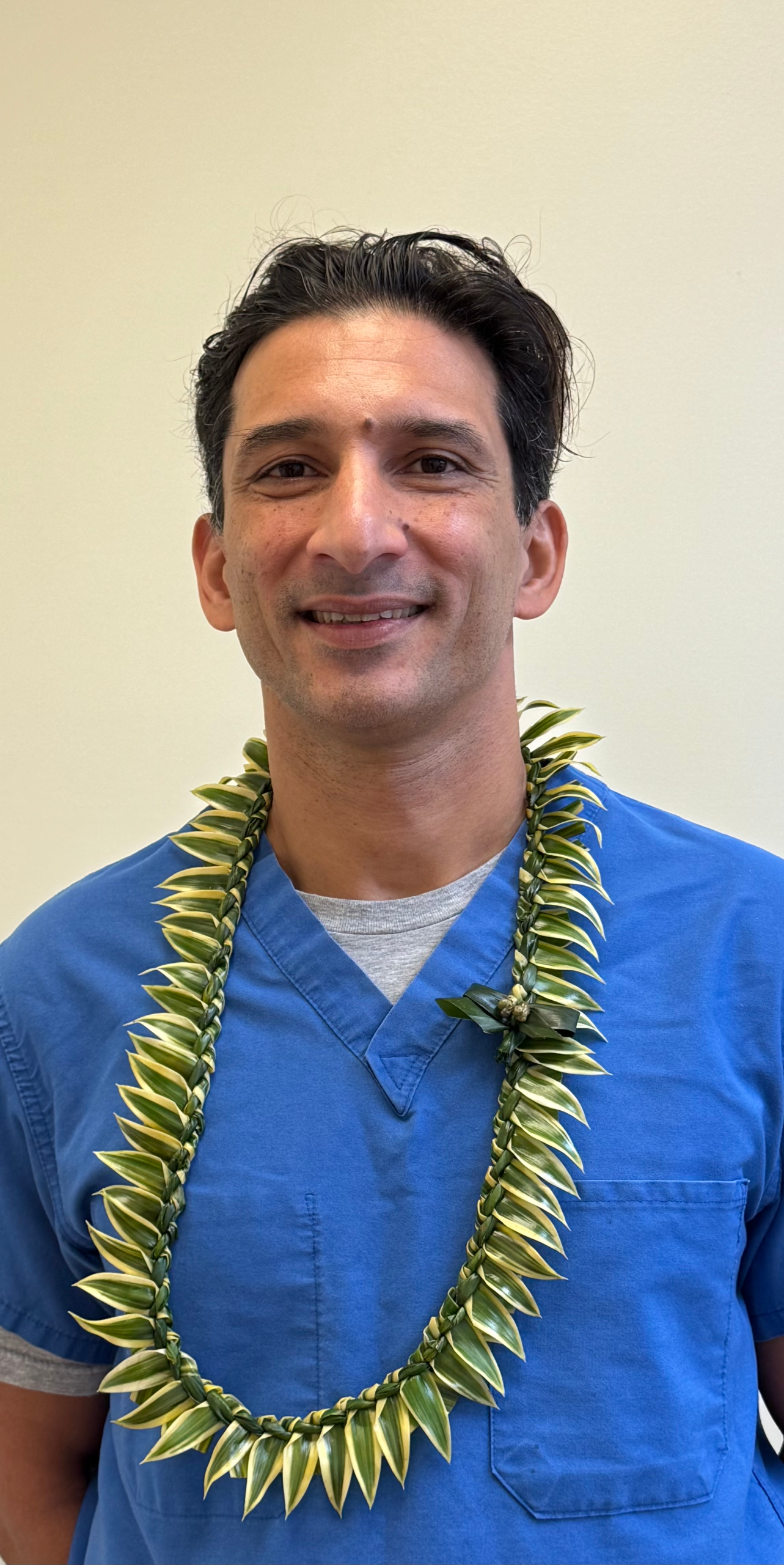
At your first visit: Dr. Vally reviews your existing records, examines you, and may perform in-office diagnostic ultrasound to evaluate the current state of the injury. If the original diagnosis was correct and the treatment was appropriate, he builds on what's already been done. If the diagnosis was wrong or incomplete, he corrects it and builds a new treatment plan based on what's actually causing the pain. Either way, you leave with a clear understanding of the diagnosis, the treatment plan, and the expected timeline.
After your first visit: VMG takes over all documentation, treatment authorization requests, insurer coordination, progress reports, and work restriction management. The WC case transfers seamlessly. The carrier is notified of the physician change. You don't have to coordinate anything between the old doctor and the new one.
Will switching doctors hurt my claim? No. Switching doctors does not weaken your workers' compensation claim. In fact, switching to a physician who produces better documentation often strengthens the claim. What hurts a claim is prolonged treatment without improvement and a fragmented medical record. A new physician who identifies the correct diagnosis, implements effective treatment, and produces a consistent longitudinal record from that point forward puts the case on a stronger footing than continuing with an approach that isn't working.
This is uncomfortable to say, but it's true and you deserve to know it. The insurance carrier's financial interest is not aligned with your recovery. Every authorized treatment is a cost. Every month your claim stays open is an expense. The carrier benefits when treatment is delayed, denied, or declared complete at the earliest possible point.
That doesn't mean carriers are acting illegally or in bad faith in every case. It means the system is adversarial by design. The carrier's utilization review team evaluates whether a proposed treatment meets their criteria for medical necessity. If your doctor's documentation doesn't meet that threshold, the treatment gets denied, regardless of whether it would actually help you.
This is where physician documentation quality becomes the determining factor. A treatment authorization request that says "patient has back pain, requesting epidural injection" gets denied. A request that says "patient has L5-S1 disc herniation compressing the right S1 nerve root, producing radiculopathy with progressive right ankle dorsiflexion weakness, MRI-confirmed, unresponsive to 8 weeks of conservative management including oral NSAID therapy, requesting fluoroscopically-guided transforaminal epidural steroid injection at L5-S1 on the right" gets approved. Same treatment. Same patient. The documentation is the difference.
If your treatment authorizations keep getting denied, the problem may not be the insurance carrier. It may be the documentation your doctor is submitting.
You don't have to fully commit to switching doctors before exploring your options. A second opinion is a reasonable step when your treatment has plateaued, and it doesn't disrupt your current care unless you decide to transfer.
Consider a second opinion when treatment hasn't produced meaningful improvement after 6-8 weeks, when you've been told the injury is "as good as it's going to get" but you still have significant pain and functional limitations, when the carrier has declared or is pushing for maximum medical improvement and you disagree, or when you want to understand whether other treatment options exist that haven't been tried.
At VMG, a second opinion evaluation follows the same thorough process as a new patient visit. Dr. Vally reviews your records, examines you, and gives you his assessment of the diagnosis, the appropriateness of the current treatment, and what he would do differently. You then decide whether to transfer your care or continue with your current provider.
| Location | Address | Phone |
|---|---|---|
| Kona | 81-6587 Mamalahoa Hwy, Kealakekua, HI 96750 | (808) 935-6353 |
| Hilo | 82 Puuhonu Pl, Suite 202-203, Hilo, HI 96720 | (808) 935-6353 |
| Lihue | 2978 Haleko Rd Suite B, Lihue, HI 96766 | (808) 935-6353 |
| Kihei | 310 Ohukai Rd Suite 309, Kihei, HI 96753 | (808) 935-6353 |
All locations accept all Hawaii workers' compensation insurance carriers and OWCP for federal employees. By appointment only.
If your work injury has stalled, it may be time for a different approach. Vally Medical Group provides physician-led, opioid-free interventional treatment with the documentation that gets authorizations approved. Transfer patients welcome at all four locations.
Start Your Transfer →(808) 935-6353 • Monday–Friday 8am–4pm • All locations
Your Right to Choose Your Doctor • What to Expect at Your First Visit • Workers' Comp Claim Denied? • Hawaii Workers' Compensation Guide • Opioid-Free Pain Management • Injection Therapy • PRP Therapy • Ultrasound-Guided Procedures • Workers' Comp Doctor Hawaii
Disclaimer: This article is provided for informational and educational purposes only and does not constitute medical or legal advice. Treatment outcomes vary between individuals and depend on diagnosis, injury severity, and individual factors. For questions about your workers' compensation rights or your specific claim, consult a Hawaii workers' compensation attorney.