Kauai's construction boom means more injuries on the job site. Here's where construction workers on the Garden Isle can get specialized treatment without leaving the island, and what your workers' comp claim needs to get approved.
Kauai is in the middle of a sustained construction cycle. The North Shore is seeing ongoing renovation and rebuilding of resort properties along the Princeville corridor. The South Shore continues residential and commercial development from Poipu through Koloa. Infrastructure projects across the island, including road improvements, utility upgrades, and public facility construction, are drawing crews from across Hawaii and the mainland. And the ongoing maintenance demands of Kauai's aging resort inventory keep skilled tradespeople working year-round.
What makes construction on Kauai different from Oahu or the mainland is the environment. The island receives more rainfall than any other populated Hawaiian island. Job sites are frequently wet. Terrain is uneven, often carved from volcanic rock with steep grade changes. Access roads to remote sites along the North Shore and in the mountains are narrow and unpaved. And the humidity accelerates fatigue, which increases injury risk during the second half of a shift.
The result is a construction workforce that gets hurt at elevated rates, on an island with limited specialized medical options. Most construction workers injured on Kauai face a choice: see a general practitioner who doesn't specialize in occupational injuries, fly to Oahu for treatment (losing work days and adding inter-island travel costs), or see the provider their employer tells them to see.
There's a better option.
The specific construction projects active on Kauai determine the types of injuries that walk through the door. Each project type produces different injury patterns because the physical demands are different.
| Project Type | Active Kauai Sites | Common Injuries |
|---|---|---|
| Resort Renovation | Princeville resort corridor, 1 Hotel Hanalei Bay, St. Regis replacement, North Shore luxury properties, South Shore condo renovations | Overhead shoulder injuries from ceiling and fixture work, back injuries from demo and hauling debris in tight spaces, knee injuries from floor-level finish work in hotel rooms, wrist and hand injuries from detail carpentry |
| Residential Development | South Shore subdivisions (Poipu, Koloa, Lawai), Kapaa corridor residential projects, custom home builds in Kilauea and Princeville | Lumbar disc herniations from framing (lifting and positioning walls), rotator cuff tears from overhead roofing and siding, fall injuries from ladders and second-story framing, knee injuries from extended kneeling on slabs |
| Infrastructure | Kaumualii Highway improvements, bridge repairs, utility upgrades, County road projects, water and sewer system work | Whole-body vibration injuries from heavy equipment (excavators, pavers, compactors), acute back injuries from trench work and pipe installation, hand-arm vibration syndrome from jackhammers and concrete saws |
| Commercial & Retail | Kukui Grove Shopping Center renovations, Lihue commercial corridor, Kapaa town retail buildouts | Repetitive strain from electrical rough-in and finish work, carpal tunnel from sustained power tool use, back strain from drywall finishing at overhead heights |
| Facility Maintenance | Grand Hyatt Kauai, Sheraton Kauai, Koloa Landing, Marriott Kauai Beach Club, resort golf course maintenance | Cumulative overuse injuries from daily maintenance tasks, acute injuries from emergency repairs under time pressure, repetitive ladder climbing, overhead fixture replacement |
The leading injury category for Kauai construction workers. Disc herniations from lifting, facet joint injuries from repetitive extension and rotation, muscle strains from sustained bent postures, and SI joint dysfunction from asymmetric loading. Kauai's wet, uneven terrain adds a destabilizing element that mainland flat-lot construction doesn't produce: the worker's core and spine must constantly compensate for unstable footing, increasing the baseline load on lumbar structures throughout the shift.
How we treat it: Epidural steroid injections for disc-related nerve compression, facet joint injections for mechanical back pain, trigger point injections for paraspinal muscle spasm, and PRP therapy for chronic disc and ligament injuries. All performed under ultrasound guidance at the Lihue clinic.
Rotator cuff injuries from overhead framing, roofing, painting, and electrical work. The supraspinatus tendon gets compressed hundreds of times per shift during overhead arm elevation. On Kauai renovation projects where workers are removing and replacing ceiling fixtures, trim, and overhead systems in existing hotel rooms, the overhead work is often performed in cramped spaces with limited range of motion, which forces the shoulder into mechanically disadvantaged positions that accelerate tendon damage.
How we treat it: Subacromial corticosteroid injection for immediate inflammation relief, PRP therapy for structural tendon repair, trigger point injections for secondary upper trapezius and periscapular muscle spasm. In-office diagnostic ultrasound at the Lihue clinic identifies partial tears, tendinopathy, and bursitis without the delay and cost of an MRI referral off-island.
Knee injuries from kneeling on concrete and lava rock (prepatellar bursitis), meniscus tears from twisting under load on uneven terrain, patellar tendinopathy from repetitive squatting and stair climbing, and ligament sprains from falls and sudden directional changes. Tile setters, plumbers, and electricians doing rough-in at floor level accumulate the most knee damage on Kauai job sites.
How we treat it: Ultrasound-guided joint injection for inflammation, PRP for osteoarthritis and tendinopathy, trigger point injections for compensatory muscle pain in the quadriceps and IT band.
Carpal tunnel syndrome from power tool vibration and repetitive gripping. Tennis elbow (lateral epicondylitis) from repetitive wrist extension during hammering, drilling, and screwdriving. Trigger finger from sustained forceful gripping. These injuries develop cumulatively over weeks to months of repetitive exposure and are fully compensable under Hawaii workers' compensation as occupational diseases.
How we treat it: Ultrasound-guided carpal tunnel injection, PRP for chronic tendon damage, corticosteroid injection for tennis elbow and trigger finger. Ergonomic work modification recommendations to address the occupational cause.
Every treatment listed above is available at the VMG Lihue clinic at 2978 Haleko Road, 5 minutes from Lihue Airport. PRP therapy, ultrasound-guided injections, nerve blocks, HBOT, and PENS/TENS. You don't need to lose work days flying to Oahu for specialized injury treatment. Kauai construction workers can get the same interventional medicine available at our Big Island and Maui clinics without leaving the island.
Every construction injury described above is compensable under Hawaii workers' compensation. Both acute injuries (falls, sudden lifts, impacts) and cumulative injuries (repetitive strain, gradual disc degeneration, chronic tendinopathy from months of overhead work) are covered.
Multi-employer confusion. Kauai construction workers often work for different subcontractors on the same project, or move between projects for different general contractors within the same month. When an injury develops cumulatively, the question of which employer's WC policy is responsible gets complicated. This is a legal question your workers' compensation attorney navigates, but the medical documentation must establish the overall pattern of occupational exposure regardless of which specific employer is named on the claim.
Mainland contractor coverage. Some Kauai projects employ mainland-based contractors who carry WC policies from their home state. If you're a mainland worker injured on a Kauai job site, Hawaii's workers' compensation law generally applies to injuries occurring in Hawaii, but the coverage and claims process can involve cross-jurisdictional issues. Get medical treatment immediately and let the legal and insurance questions get sorted out afterward. Your health comes first.
Limited provider options and employer steering. Because Kauai has fewer medical providers than Oahu or the Big Island, employers and GCs can more effectively steer injured workers to specific clinics by claiming there are no other options. This is not accurate. Under Hawaii law (HRS 386-21), you have the right to choose your own treating physician. Your GC cannot require you to see any specific doctor. VMG's Lihue clinic exists specifically so Kauai workers have a specialized occupational medicine option without leaving the island.
What VMG handles for Kauai construction workers: WC-2 physician's reports documenting the injury and its connection to your specific construction tasks. Treatment authorization requests with medical justification that carriers need to approve procedures. Utilization review responses when carriers challenge treatment. Trade-specific work restrictions your superintendent can actually implement on a construction site (specific lifting limits, positional restrictions, equipment restrictions). Supplemental medical narratives for disputed claims. Direct billing to the WC carrier so you never see a bill. All of this from the Lihue clinic without a single inter-island flight.
Kauai has a significant federal construction presence. The Pacific Missile Range Facility (PMRF) at Barking Sands employs civilian maintenance, construction, and facility workers who are covered under the Federal Employees' Compensation Act (FECA/OWCP), not Hawaii state workers' compensation. OWCP claims have stricter documentation requirements than state WC, including detailed rationalized medical opinions that explicitly connect the diagnosed condition to specific federal employment duties.
Other federal construction and maintenance workers on Kauai include National Tropical Botanical Garden facility staff, USPS facility maintenance crews, and contractors working on federal projects at Lihue Airport. VMG has extensive experience with OWCP documentation standards and provides the detailed medical narratives that federal claims examiners require.
Construction work restrictions that say "light duty" are useless. There is no light duty on a framing crew. What the superintendent needs is specific parameters: lifting limited to 30 pounds for weeks 1-2 progressing to 50 pounds by week 4, no overhead work above shoulder height, no sustained kneeling beyond 15 minutes, no exposure to whole-body vibration equipment. Those are restrictions a GC can work with.
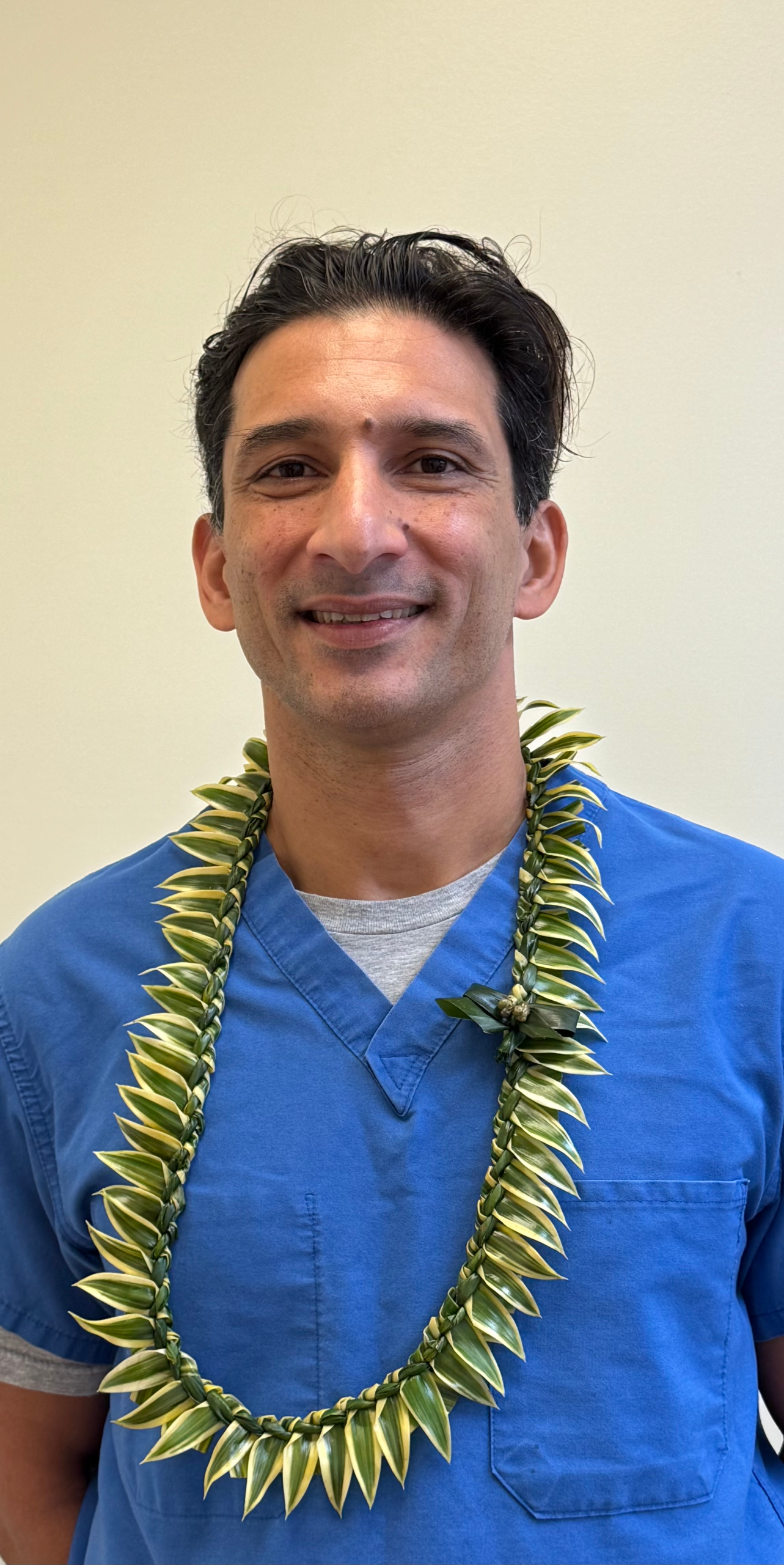
Dr. Vally writes trade-specific restrictions based on your actual construction role, not generic categories. The restrictions are documented in the medical record with specific functional parameters, progression timelines, and objective criteria for advancing to the next level. The return-to-work program transitions you from modified duty back to full unrestricted construction work in documented stages that protect you from re-injury and demonstrate measurable progress to the insurance carrier.
This documentation also protects you if the carrier tries to argue you've reached maximum medical improvement (MMI) prematurely. When the medical record shows specific functional milestones that haven't been met, a premature MMI determination is harder to defend.
| Detail | Information |
|---|---|
| Location | 2978 Haleko Rd Suite B, Lihue, HI 96766 |
| Distance from Airport | 5 minutes by car |
| Phone | (808) 935-6353 |
| Hours | Monday through Friday, 8am to 4pm |
| Insurance | All Hawaii workers' compensation carriers and OWCP for federal employees |
| Treatments Available | PRP therapy, epidural steroid injection, facet joint injection, trigger point injection, corticosteroid joint injection, selective nerve root block, HBOT, PENS/TENS. All injections ultrasound-guided. |
| Accessibility | Central Lihue location accessible from North Shore (45 min), South Shore (25 min), West Side (35 min), and Kapaa (20 min) |
Vally Medical Group's Lihue clinic provides specialized construction injury treatment without leaving the island. Ultrasound-guided injections, PRP, HBOT, and opioid-free pain management. We handle the workers' comp paperwork.
Start Your Intake →(808) 935-6353 • Monday–Friday 8am–4pm • 2978 Haleko Rd Suite B, Lihue
Lihue Clinic • Construction Worker Back Pain Treatment • OWCP Doctor on Kauai • Rotator Cuff Treatment • Knee Pain Treatment • Carpal Tunnel Treatment • Injection Therapy • PRP Therapy • Return to Work Programs • Right to Choose Your Doctor • Workers' Compensation Guide
Disclaimer: This article is provided for informational and educational purposes only and does not constitute medical or legal advice. Injury severity, treatment options, and outcomes vary between individuals. For diagnosis and treatment, consult a qualified physician. For questions about your workers' compensation rights, consult a Hawaii workers' compensation attorney.